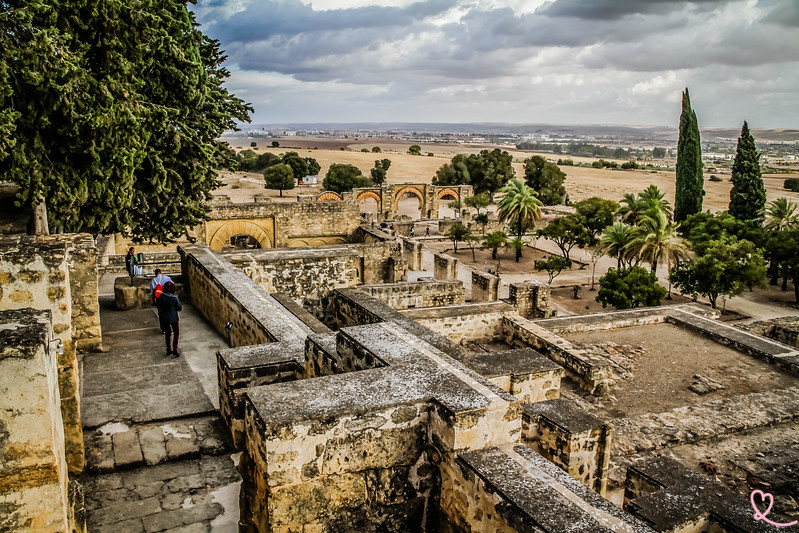
Located just a few kilometers from Cordoba, this fascinating archaeological site, a UNESCO World Heritage Site, bears witness to the grandeur of the ancient Caliphate of Cordoba. We explored the ruins of this 10th-century palatial city, marvelling at the scale and sophistication of its architecture.
In this article, you’ll find some useful tips to help you prepare for your visit to Cordoba’s Medina Azahara.
This opinion is completely independent, based on our experiences. We made our own choices, visited the area anonymously, and paid our bills in full.
Why visit Cordoba’s Medina Azahara?
Is the Azahara medina worth it? Our opinion:
Yes, the Azahara medina is well worth a visit. We were particularly impressed by the Royal House, with its finely chiselled marble decorations. The sheer size of the site and the sophistication of its architecture bear witness to the grandeur of Hispano-Moorish civilization. It’s one of our top 10 archaeological sites in Andalucia!

Why is the Azahara medina famous?
The Azahara medina is famous for being one of the most important palatine cities of the Caliphate era. Built in the 10th century under the reign of Abd al-Rahman III, it represents the apogee of Hispano-Moorish civilization. Its inclusion on UNESCO’s World Heritage List recognizes its exceptional historical and architectural importance. The richness of its marble decorations and the scale of its remains make it a unique archaeological site in Andalucia.

Our favorite moments
We loved the details of the Royal House’s marble decorations, which were so abundant and captivating!

WHERE TO STAY IN Cordoba
Our favorites: neighborhoods and hotels
Historic district
Hotel Las Casas de la Juderia – See prices, photos and availability
Hotel Madinat – See prices, photos and availability
Santa Marina district
Hotel Hospes Palacio del Bailio – See prices, photos and availability
- Hotel 1 – See prices, photos and availability
- Hotel 2 – See prices, photos and availability

See our complete selection of the best hotels in Cordoba
History in brief
The story of Medina Azahara is as fascinating as it is brief:
- 936: Abd al-Rahman III orders the construction of the Palatine City
- 10th century: the city becomes the center of caliphal power and reaches its apogee
- 1010: The city is destroyed in the civil war that marks the end of the Caliphate of Cordoba
- 20th century: Archaeological excavations begin, gradually revealing the extent of the site
- 2018: The site is listed as a UNESCO World Heritage Site

Access: Medina Azahara, Cordoba
Where is Medina Azahara?
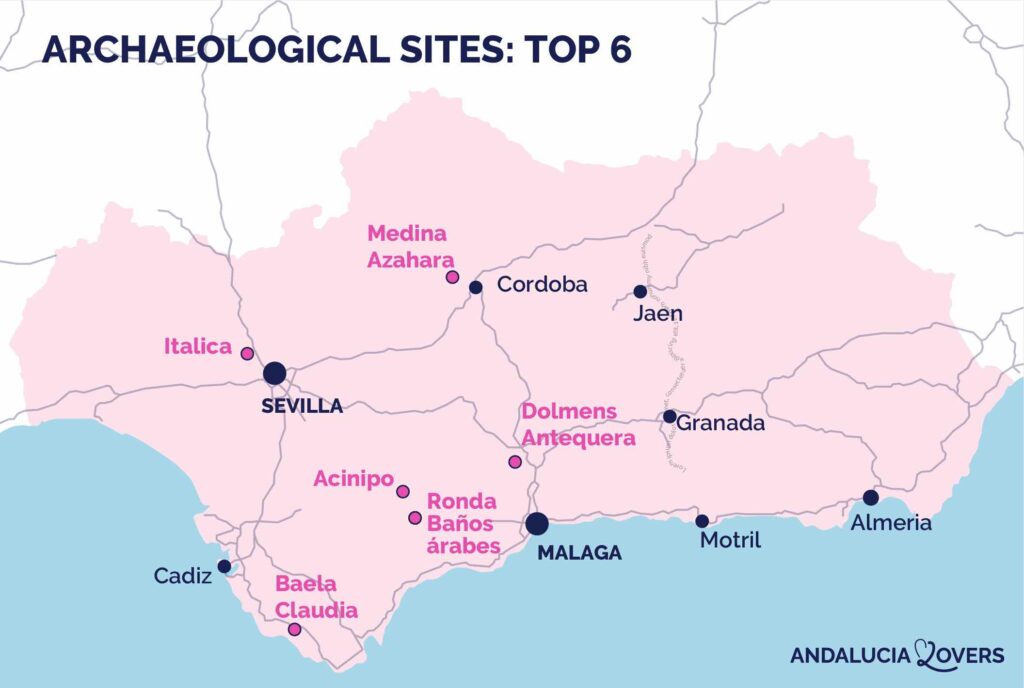
Medina Azahara is located about 8km west of the center of Cordoba, Andalucia.
Here’s a map to help you find your way:
RENT A CAR IN Andalucia
- Compare prices on our preferred platform: DiscoverCars – one of the best rated sites.
- Choose a compact car, as some villages have very narrow streets!
- Think ofcomprehensive insurance for the same reason
- Book early for choice.


How to get there?
The easiest way to reach the Azahara medina is by car. The site is only a 15-minute drive from Cordoba.
If you’re taking public transport, the nearest stop is “Córdoba La Vieja” on the city’s transport network.

Parking
Free parking is available near the visitor center. It is open at the same times as the site. Shuttle buses run between the parking lot and the archaeological site, around 2km away.

DISCOVER Cordoba
- Things to do in Cordoba
- Best hotels in Cordoba
- Best restaurants
- Best museums and palaces
- Visit the cathedral
- Visit Medina Azahara (coming soon)
- Itineraries: 1 day – 2 days – 3 days

Useful tips: duration, schedules, eating…
Best time to visit
We advise you to visit in the morning or late afternoon, especially in summer, to avoid the heat. As the site is located in the middle of nature, it can be very exposed to the sun. And don’t forget to check the opening times before your visit, as they vary according to the season.

Length of visit and main difficulties
Allow between 2 and 4 hours to explore the entire site and museum. The site is difficult to access for people with reduced mobility. We found that the ground is generally uneven, with many stones and steps. Bring comfortable, closed-toe shoes. Don’t forget to bring sun protection and water, especially in summer.

Advice on how to visit
We recommend that you start by visiting the museum at the visitor center. You’ll gain a better understanding of the historical context before discovering the archaeological site. Then take the shuttle to the ruins. On site, follow the signposted route that takes you gradually from the public areas to the residential quarters and the Maison Royale.

PLAN YOUR DREAM TRIP TO andalucia
All the information you need for your trip:
- 7 maps that make planning easier
- + 150 pre-selected locations
- Practical advice
- 300+ photos to help you choose

Visiting with children
The tour may be of interest to children curious about history, but as the site is extensive and sometimes difficult to access, it is best suited to children aged 8 and over. The museum offers educational materials to help them better understand the site.
Schedules and rates
The site is now open:
- Tuesday to Saturday, 9 a.m. to 6 p.m.
- Sunday, 9 a.m. to 3 p.m.
- Closed on Monday
Free admission for European Union citizens. Please check the timetable before your visit here.

Guided tours
Guided tours of the site are available. They will deepen your understanding of the history and architecture of Medina Azahara.
Book your guided tour of Medina Azahara now!
Catering
A cafeteria is available near the visitor center, offering cold snacks, drinks and sandwiches. For more elaborate meals, you’ll have to head for Cordoba, where you’ll find a host of restaurants in the historic center.
See our selection in our article Where to eat in Cordoba.
Subscribe to our Newsletter
- Get away from it all with Region Lovers’ beautiful destinations!
- Once a month
- Advertising-free

An architecture of marble and light
We were immediately struck by the architectural sophistication of Medina Azahara. The Royal House represents the apogee of this art. Its finely chiseled marble decorations fascinated us with their precision and refinement. You’ll notice the intricate geometric patterns adorning the walls and arches. Caliphate craftsmen used different shades of marble, creating subtle plays of color that change with the light of day. We spent a long time observing these details, witnesses to the exceptional skills of 10th-century craftsmen. The slender columns and sculpted capitals reveal the influence of different architectural traditions, perfectly integrated in a unique style. Take time to admire the remains of the ceremonial rooms where the Caliph received his guests in a setting of unrivalled splendor. The layout of the rooms demonstrates a remarkable mastery of Palatine architecture, with each element contributing to the overall harmony.

A panoramic balcony overlooking the valley
The site’s position offers exceptional panoramic views over the Guadalquivir valley. We now understand why Abd al-Rahman III chose this strategic location. From the upper terraces, you’ll be able to take in the expanse of the palatial city, spread over several levels. The terraced layout enabled ingenious management of space and created an impressive architectural hierarchy. Administrative buildings occupied the intermediate levels, while residential quarters were located further down. We imagined the intense activity that once animated these premises, with thousands of people living and working there. The gardens fit harmoniously into this composition, bringing freshness and pleasure to the various levels. See how the builders took advantage of the natural topography to create a remarkably coherent architectural ensemble.

The museum: a key to understanding
The visitor center’s museum helped us contextualize our visit to the archaeological site. Exhibitions trace the tumultuous history of Medina Azahara, from its ambitious construction to its rapid destruction during the civil war of 1010. You’ll discover exceptional objects unearthed during the excavations, including ceramic fragments, sculpted architectural elements and coins. Explanatory panels detail the building techniques used and the social organization of the Palatine city. The museum also presents the history of archaeological excavations undertaken since the early 20th century. You’ll gain a better understanding of how archaeologists have gradually revealed the extent of this exceptional site. Models and plans help us understand the complex spatial organization of Medina Azahara.

PLAN YOUR TRIP TO Andalusia
Inspiration

Practice
- Where to stay in Andalucia
- Best luxury hotels in Andalusia (coming soon)
- Best restaurants
- Rent a car in Andalucia
- Driving in Andalucia
- Itineraries: 3 days – 4 or 5 days – 1 week – 10 days – 2 weeks (coming soon)