Discover the historic La Concepción Botanical Garden, a haven of peace at the gateway to Malaga. After exploring the hustle and bustle of Malaga, let yourself be seduced by the shady alleys, fountains and sculptures that create a soothing, romantic atmosphere. This historic garden, home to more than 25,000 plants of 2,000 different species, is a must-see for nature and botany enthusiasts, as well as those looking for a colorful, immersive stroll.
In this article, you’ll find our photos and tips for making the most of your visit to the historic Botanical Garden La Concepcion in Malaga.
This opinion is completely independent, based on our experiences. We made our own choices, visited the area anonymously, and paid our bills in full.
Why visit La Concepcion Botanical Garden?
Is La Concepcion Botanical Garden worth a visit? Our opinion:
Yes, the Botanical Garden is even one of our must-sees in Malaga! Perched high above Malaga, it offers an immersive botanical experience, combining brilliant colors and panoramic views of the city. You’ll be amazed by the variety of species and spaces, alternating between finely landscaped gardens and lush areas that give the impression of exploring a wild jungle!


Our favorite moment
We particularly appreciated the soothing atmosphere of the historic La Concepción Botanical Garden, making it a haven from the hustle and bustle of Malaga. As we climbed up the scenic road, offering a bird’s-eye view of the lush canopy, we almost forgot we were still in town!

History in brief
- 1855: Creation of the garden by Jorge Loring and Amalia Heredia. They enlisted the help of French gardener Jacinto Chamoussent, a specialist in exotic plants, to design the estate on farmland.
- 1911: The estate is sold to Rafael Echevarria and Amalia Echevarrieta, a couple from Bilbao. They enriched the garden by adding the nymphs’ stream, the palm alley, a belvedere offering panoramic views of Malaga, and contemporary sculptures.
- 1943: La Concepción is officially classified as a Garden of Historical and Artistic Interest, in recognition of its heritage importance.
- 1990: The municipality of Malaga acquires the estate to preserve and restore it.
- 1992: Infrastructure and adaptation work is carried out to preserve the historic garden and transform part of the estate into a scientific botanical area.
- 1994: The garden is opened to the public with two aims: to conserve and embellish the historic garden, while showcasing the plant collections for research purposes.

PLAN YOUR DREAM TRIP TO andalucia
All the information you need for your trip:
- 7 maps that make planning easier
- + 150 pre-selected locations
- Practical advice
- 300+ photos to help you choose

How to get to La Concepcion Botanical Garden: access and map
Where is La Concepcion Botanical Garden?
- In the northern part of Malaga, along the banks of the Guadalmedina river
- Driving time from downtown: 15min by car

RENT A CAR IN Andalucia
- Compare prices on our preferred platform: DiscoverCars – one of the best rated sites.
- Choose a compact car, as some villages have very narrow streets!
- Think ofcomprehensive insurance for the same reason
- Book early for choice.

How to get there?
There are several options for getting to Malaga’s La Concepción Botanical Garden:
- By car – The journey from the city center takes about 15-20 minutes along the Colmenar road (A-7000). If you don’t have a rental car, note that cabs and vtc serve the park very smoothly. It’s the fastest option!
- By bus – If you prefer an economical option, you can opt for the bus, but the journey time will be considerably longer.
From the Atarazanas station, a bus (line 2- San José stop) takes 20 minutes to reach the site.
From here, it’s another 15-minute walk. Consult the timetables and itineraries on the official Malaga transport website to plan your visit.
Parking
On-site parking is available at the park entrance.
Please note, however, that places are limited.
If you’re brave enough to cycle from the center, there’s also bike parking on the premises.

WHERE TO STAY IN Málaga
Our favorites: neighborhoods and hotels
In the historical center
Hotel Palacio Solecio – see photos and availability
Near the sea, Playa de la Magualeta
Gran Hotel Miramar – see photos and availability
In the Soho district
Hotel Only You Malaga – view photos and availability

Useful tips: duration, schedules, difficulties…
Best time to visit, opening hours and prices
Spring is the best time to visit the garden, especially to admire the wisteria in bloom, which is said to be impressive at this time of year.
You can visit the garden at any time, however, because despite its popularity, the site remains spacious and pleasant to navigate.
The garden is open from 9.30am to 7.30pm (April-September) and from 9.30am to 4.30pm (October-March).
Prices are as follows: €5.20 (adults), €3.10 (concessions) and free on Sundays.
Length of visit and main difficulties
We recommend you allow at least 1 hour to visit the entire historic garden, and up to 3 hours to explore the entire estate at your own pace.
We didn’t come across any difficulties other than the sheer size of the site. The ground is relatively even, and there are plenty of benches in the park for relaxing in the shade.
Please note, however, that some areas are not accessible to PRMs due to the presence of stairs and sandy ground.

Advice on how to visit
The garden doesn’t really have a predefined sense of direction.
You can stroll around at your leisure and be surprised by the labyrinthine layout and the different atmospheres from one area to the next.
If you’re short of time, we recommend starting with the historic garden in the middle of the site, whose 30,000m2 should keep you busy for a while, before taking to the heights of La Ruta de los Miradores and admiring the panorama.
Here’s a map to show you the different areas:

Visiting with children
We didn’t find any special facilities for children, but many workshops and tours are available on reservation. Find out more on the official website here.
Finally, if you want to create a vocation among your children, you can find plants or seeds in the boutique, so you can take a little bit of the garden home with you!

Catering, Toilets and Facilities
The garden has a refreshment stand where you can buy drinks and snacks (ice creams, cakes), as well as pitches with tables and chairs. Bring your own picnic to make the most of the setting!
You’ll also find toilets at several points along the route, as well as numerous shaded areas and benches, inviting you to contemplate…


FUN in Andalucia: activities
- Cooking course in Sevilla
- Canyoning from the Costa del Sol
- Guided Hike on the Caminito del Rey

An immersive botanical voyage
An extraordinary botanical collection
The first thing that struck us on arrival was the incredible botanical wealth of the garden. You won’t know which way to turn among the 25,000 plants belonging to 2,000 different species. You’ll discover almost 90 varieties of palm trees, most of them in the alley leading to the historic kiosk (number 15 on the map), and 80 species of trees from all over the world (number 20 on the map).
And let’s not forget the various ponds featuring remarkable aquatic plants!

We also liked the fact that the garden showcases 200 native plants, while housing a wide variety of tropical and subtropical species. You’ll be able to admire local plants, such as a magnificent collection of lemon trees, as well as exotic varieties, such as Guzmania, a dazzling plant native to South America.
Note that if you particularly like a particular plant, you can find a detailed description of the species on the garden’s website (more information here).


Finally, take the time to see the monumental species, such as the Himalayan cedar, the mythical Ginkgo biloba and the Chilean palm, which rival each other in beauty!
Don’t miss the Ficus macrophylla next to the Ponte Jorge Loring, which is a sight to behold. Native to Australia, it is as spectacular for its enormous crown of leaves as for its sprawling roots. In fact, we spent a long time observing their path through the ground.

A sensory stroll
This was probably our favorite part of our visit: being enchanted by the magic of the garden! The walk will stimulate your senses, from the gentle murmur of the water that accompanies your path to the spectacle of the vivid colors of the plants that stand out against the varied shades of green, creating a unique atmosphere.
Don’t miss the garden of scents (number 42 on the map) and the Cascada de Mosteras, surrounded by the broad leaves of the Monstera deliciosa plant. Built around 1878 by Jorge Loring, this waterfall divides the garden into two sections with its torrents, streams, small bridges, stone steps, ponds and other more discreet cascades.

We were also seduced by the striking contrast between the different spaces in the garden. One minute you’re in a jungle-like area, the next you’re in a landscaped garden. A fine example is the Etang de la Nymphe, located in the heart of the historic garden. The sculpture by Valentin Dueñas was installed as part of a series of new landscaping schemes initiated in 1911 by the estate’s second owners, the Echevarria-Echevarrieta family.

A panoramic tour: between exploration and contemplation
Lookouts and scenic routes
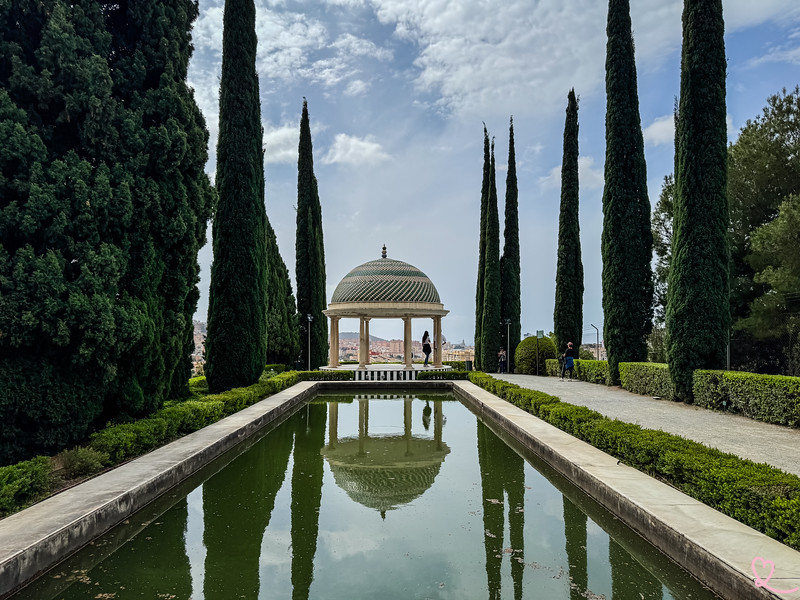
The Malaga Botanical Gardens offer a multitude of enchanting nooks and crannies to explore. Among its many attractions are winding trails, soothing waterfalls, ancient greenhouses and panoramic views. The star of the garden is undoubtedly the historic belvedere and its charming kiosk, built in 1920, which attracts lovers looking for a picturesque photo as much as those looking for an unobstructed view of the city of Malaga.

We strongly recommend you finish your tour on the Ruta de los Miradores (number 18 on the map), which overlooks the historic garden. If you have more time, take a stroll along La Ruta forestal (number 44 on the map), a 1,200-metre route offering unique views of the garden, the city and, on the horizon, the Montes de Malaga nature park.

Theme gardens
Once you’ve got the hang of it, you can take a contemplative break in the various themed gardens. In particular, you’ll find the Cactus and Succulent Garden (number 16 on the map), featuring both slender and chubby cactus silhouettes. The primitive plant collection (number 38 on the map) is also very interesting, featuring plants that have survived on the planet for 250 million years!

Last but not least, you won’t want to miss the bamboo collection (number 34 on the map), which offers an enchanting walk that almost makes you feel like you’ve been tele-transported to Japan!

Frequently asked questions
Are dogs allowed in the Malaga Botanical Gardens?
Yes! Your faithful companions can accompany you on your visit, provided they are kept on a leash.
Are there any special events or temporary exhibitions at the Malaga Botanical Gardens?
Yes, the garden offers a variety of cultural activities all year round. You can attend live music concerts, take part in “Nuits avec l’Histoire” guided night tours on Fridays, or enjoy special events for Halloween and Christmas. In December and January, “Les Lumières du Jardin Botanique” offers an enchanting light show. Find out more on the official website here.

Are there any other outstanding gardens in Malaga?
If you want to extend the benefits of nature, head for the Guadalhorce Nature Park, a veritable green oasis just outside Malaga, where you can observe numerous species of birds. If you’re in the mood for more than just a stroll, we recommend the Montes de Malaga Forest Park, with its many hiking and mountain-biking trails among the pine trees. Finally, thrill-seekers can hike the mythical Caminito del Rey1 hour from Malaga, which we’ve tested for you!

Other nearby attractions
Although the Botanical Garden is located in the hills above Malaga, it’s only a 15-minute drive from the historic center, where you’ll find all the city’s must-see sites, such as the Alcazaba (photo below).
Take a look at our article What to do in Malaga to finalize your program!

PLAN YOUR TRIP TO Andalusia
Inspiration

Practice

Places not to be missed