The Nerja Caves are located near Nerja and Maro, on the famous Costa del Sol in Andalucia. This vast underground network captivates visitors with its impressive karst formations, such as stalactites and stalagmites, which create a unique natural landscape. The site is also renowned for its prehistoric cave paintings, which serve as valuable evidence of the region’s earliest inhabitants.
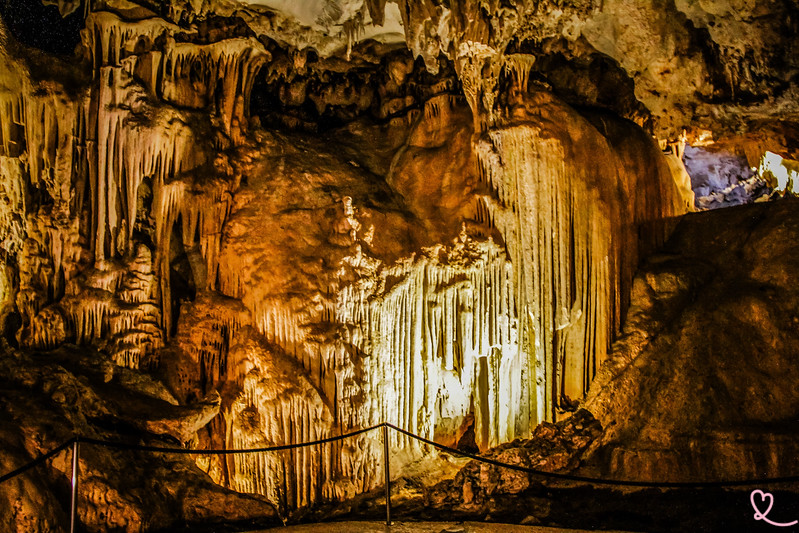
In this article, discover our helpful tips—illustrated with photos —on how to best plan your visit and fully enjoy this immersive experience in the heart of a fascinating underground world.
Why Visit the Nerja Caves
Is the Nerja Cave worth the trip? Our opinion:
Yes, the Nerja Caves are worth visiting for the unique experience they offer of a fascinating underground world. You’ll discover a trail where geological formations—such as the natural column in the Cataclysm Hall — captivate visitors with their grandeur and rarity. This site combines scientific interest with natural beauty, offering an experience that is both educational and sensory. It’s one of the best attractions in Nerja.

We particularly appreciated the careful lighting, which beautifully highlights the millennia-old stalactites and stalagmites. This atmosphere creates a spectacular setting, perfect for contemplation and exploration.
Save time, buy your ticket.

Why is the Nerja Cave famous?
The Nerja Cave is renowned for its impressive geological formations, particularly its stalactites and stalagmites of remarkable size. This underground site also contains prehistoric cave paintings, which provide evidence of ancient human habitation in the region. Designated a Historic-Artistic Monument, the cave stands out for its age and archaeological significance, making it a major attraction on the Costa del Sol.

Our favorite moments
- The play of light highlights the delicate shapes of the stalactites and stalagmites, creating an almost magical atmosphere.
- Exploring the large chambers, particularly the one where the natural column impresses with its size and apparent solidity.
- The view from the restaurant of the white houses of Maro and the sea
- Save time, buy your ticket.

WHERE TO STAY IN Málaga
Our favorites: neighborhoods and hotels
In the historical center
Hotel Palacio Solecio – see photos and availability
Near the sea, Playa de la Magualeta
Gran Hotel Miramar – see photos and availability
In the Soho district
Hotel Only You Malaga – view photos and availability

Directions: Nerja Cave, Costa del Sol
Where is the Nerja Cave located?
- Near the villages of Nerja and Maro
- On the Costa del Sol, in the province of Málaga
- From downtown Nerja = 6-minute drive
- From Málaga = 45-minute drive
- Here is a map to help you find your way around, showing Nerja on the coast east of Málaga.
The cave is east of the city:

How to get there?
- By car: Direct access via a well-maintained road with no particular difficulties—A-7 highway, Exit 295 (Nerja/Maro)
- By bus: Take the ALSA Málaga-Nerja route, then transfer to a local bus to the cave.
- Tourist train: The Cueva-Tren connects downtown Nerja to the cave, which is a convenient way to avoid driving.

Parking
Paid parking is available on site for visitors.
It’s quite large and easy to park there.

RENT A CAR IN Andalucia
- Compare prices on our preferred platform: DiscoverCars – one of the best rated sites.
- Choose a compact car, as some villages have very narrow streets!
- Think ofcomprehensive insurance for the same reason
- Book early for choice.

Useful tips: duration, schedules, eating…
Length of visit and main difficulties
The tour route through the Nerja Caves is about 500 meters long and generally takes between 45 minutes and 1 hour. You’ll pass through several main rooms equipped with walkways and appropriate lighting.
However, the tour includes stairs and steps in several places, which may make it difficult for people with limited mobility to access the site. The indoor temperature remains constant at around 19 to 21°C, with high humidity—a factor to keep in mind for your comfort.

Visiting with children
We didn’t find any activities specifically designed for young visitors at the Nerja Caves , such as an activity booklet or an audio guide for children. However, geological formations and prehistoric paintings may spark the interest of curious children, when supervised by adults. The underground atmosphere, with its special lighting, provides a unique setting for a family outing.
Schedules and rates
- Schedules:
In the summer: 9:15 a.m. to 5:30 p.m. (last admission at 4:30 p.m.)
Rest of the year: 9:15 a.m. to 4:30 p.m. (last admission at 3:30 p.m.) - Tickets are sold with specific time slots to ensure a comfortable and well-organized visit.
- Closed: January 1, January 6, May 15, December 25
- Adult price: €18
- Reduced rate:
Senior: €15
12- or 13-year-old: €14
Children ages 6 to 11: €13
Mini ticket for children ages 3 to 5: €6 - Free Admission: Free for children up to 2 years old.
- Phone: +34 952 529 520
- See the latest news on the official website here.
- Save time, buy your ticket.
Food Service and Other Services
There is a restaurant on site with a terrace and a panoramic view.
There is also a playground for children, a picnic area, and nature trails in the surrounding area.


Underground chambers carved out by water
Stalactites, stalagmites, and mineral flows
The mineral formations in the Nerja Cave are the result of slow and fascinating natural processes. Rainwater, rich in carbon dioxide, seeps through the limestone rocks of the Sierra Almijara, dissolving minerals before depositing them as concretions. This is how stalactites—which hang from the ceiling—and stalagmites—which rise from the floor—form, sometimes growing until they meet to form imposing columns.

In addition to stalactites and stalagmites, the cave features a wide variety of karst formations, such as stalagmite flows, banners, and other shapes with evocative names like flags and clouds. This visual diversity reflects local variations in water flow and geological conditions, offering a rich and complex natural spectacle to observe.

As you explore the cave, you’ll learn to distinguish between these different formations and understand how they grow—a process that takes hundreds of thousands of years. This close examination of the concretions enriches the visit by revealing the geological processes that shaped this unique site.

The Great Natural Columns
The Nerja Caves are notable for their impressive natural columns, which serve as pillars supporting the main chambers. Among them, the column in the Cataclysm Chamber is particularly striking: it reaches a remarkable height of 32 meters and was formed by the joining of a stalactite and a stalagmite. This formation is considered the world’s largest natural column, offering a striking perspective on geological processes that have unfolded over millennia.
Compare this to the size of the people in the photo below:

The tour route passes through several large rooms where these columns play a key role in shaping the perception of space. In the Ghost Hall , for example, the impressive dimensions are accentuated by carefully designed lighting that highlights the texture and size of the limestone formations.

We particularly appreciated the way these columns structure the space, creating strong visual landmarks throughout the tour. They also serve as evidence of long periods of limestone deposition, illustrating the site’s slow evolution. You’ll notice that some of the columns are so massive that they seem to support the cave’s vaulted ceiling, reinforcing the sense of immensity and depth.
FUN in Andalucia: activities
- Cooking course in Sevilla
- Canyoning from the Costa del Sol
- Guided Hike on the Caminito del Rey

A path winding through footbridges and light
The atmosphere in the underground galleries
A visit to the Nerja Caves is notable for their constant coolness and soothing darkness, which stand in stark contrast to the bright sunlight of the Costa del Sol. The geological formations are highlighted by subtle lighting that reveals the delicate beauty of the stalactites and stalagmites, creating an atmosphere that is both mysterious and serene.

The walkways and stairways along the trail
The tour route through the Nerja Caves stretches for about 500 meters, offering a gradual exploration of the various underground chambers. To facilitate visitor flow, the trail is equipped with footbridges that span certain natural areas, thereby preserving the geological formations while ensuring a clear path.

You’ll also come across several staircases scattered along the route. These features make it possible to navigate the changes in elevation between the rooms, but they do require a certain degree of mobility from visitors. We therefore recommend that you wear comfortable shoes suitable for walking and for going up and down stairs.
Audio Guides and Virtual Reality Experiences
The Nerja Caves offer a multilingual audio guide included in the ticket price, which enhances the visit by providing detailed explanations about the cave’s geological formation, the history of its discovery, and the prehistoric remains. This tool provides a better understanding of the various stages of the site’s development and the characteristics of the rooms visited. Either download it to your phone, or pay a small fee to get an Audi device.

A virtual reality room is also available on site. It offers an immersive experience that allows visitors to view parts of the cave that are otherwise inaccessible and to understand how this underground network has evolved over several millennia. This technology enhances the tour by offering an innovative and engaging interpretive experience.
The educational exhibits cover a variety of topics, including geology, prehistory, archaeological discoveries, and the lives of the area’s earliest inhabitants. These educational resources are suitable for all audiences and help foster a deeper understanding of the site beyond simply observing natural formations.

Cave paintings and traces of prehistory
Prehistoric Paintings
The Nerja Cave contains cave paintingsestimated to be about 42,000 years old. These works are among the oldest examples of prehistoric art in Europe, which gives the site significant archaeological value. Their discovery has enriched our understanding of the region’s earliest inhabitants and their artistic practices.
These paintings are no longer open to the public in order to preserve their integrity. In fact, they are particularly sensitive to factors such ashumidity, light, and human presence, which can accelerate their deterioration. This conservation measure is essential to ensuring the long-term preservation of these unique artifacts.
The scientific interpretation of the Nerja paintings remains a subject of debate. Some researchers suggest that they may have been created by Neanderthals, which would be a significant discovery regarding the artistic abilities of this human species. This hypothesis opens up new perspectives on the cultural evolution of early hominids.

A site that bears witness to ancient human settlements
The Nerja Cave is a valuable record of human habitation dating back to the Paleolithic era. The artifacts discovered—including tools and bones—attest to a continuous human presence spanning several millennia. This major archaeological site in Spain offers a window into prehistoric life, enriching our understanding of the region’s earliest inhabitants.

History in brief
A chance discovery in 1959
The site was discovered on January 12, 1959, by five young people from the village of Maro, located near Nerja. Their exploration revealed an extensive underground network, previously unknown, that would quickly attract the attention of researchers and history buffs.
Quick Opening and Recognition
The cave was opened to the public as early as 1960, allowing for an official visit shortly after its discovery. In 1961, it was designated a Site of Cultural Interest, an official recognition of its heritage and scientific value that ensures its protection and preservation.
Frequently asked questions
Do you need to book your visit to the Nerja Caves in advance?
Online reservations are strongly recommended for visiting the Nerja Caves, especially during the high season, which includes summer, school vacations, and weekends. In fact, the available time slots are limited and can fill up quickly, which helps regulate the flow of visitors and prevent overcrowding inside the site.
Can we see the cave paintings during the tour of the Nerja Cave?
The cave paintings that adorn certain parts of the Nerja Cave are not accessible during the standard tour. In fact, these decorated areas are closed to the public in order to preserve these fragile prehistoric remains and prevent any damage caused by visitors.
PLAN YOUR TRIP TO Andalusia
Inspiration

Practice

Places not to be missed