Andalucia is famous for its beaches, fortresses, and cathedrals, but it is also home to numerous archaeological sites and ruins from various periods.
Here is our selection of the best places to explore.
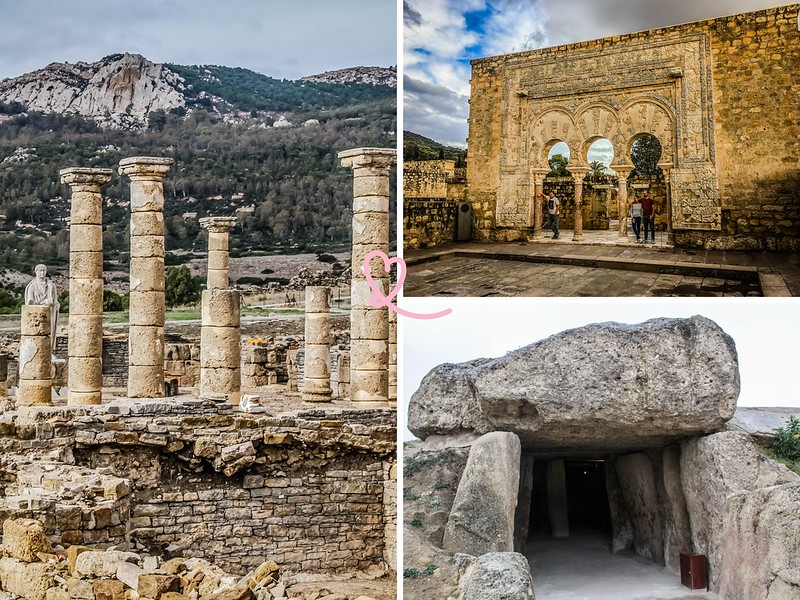
This opinion is completely independent, based on our experiences. We made our own choices, visited the area anonymously, and paid our bills in full.
Archaeological Sites and Ruins in Andalucia: Map
In Andalucia, you can explore a wide variety of archaeological sites and ruins spanning various historical periods. There are a particularly large number of Roman ruins, including well-preserved cities such as Italica, near Sevilla, and Baelo Claudia, on the coast.
There are also prehistoric sites, including ancient caves and Neolithic settlements.
You’ll also find sites with Moorish influences and numerous medieval Christian and Islamic fortifications.
Here is a chart of our top 6:
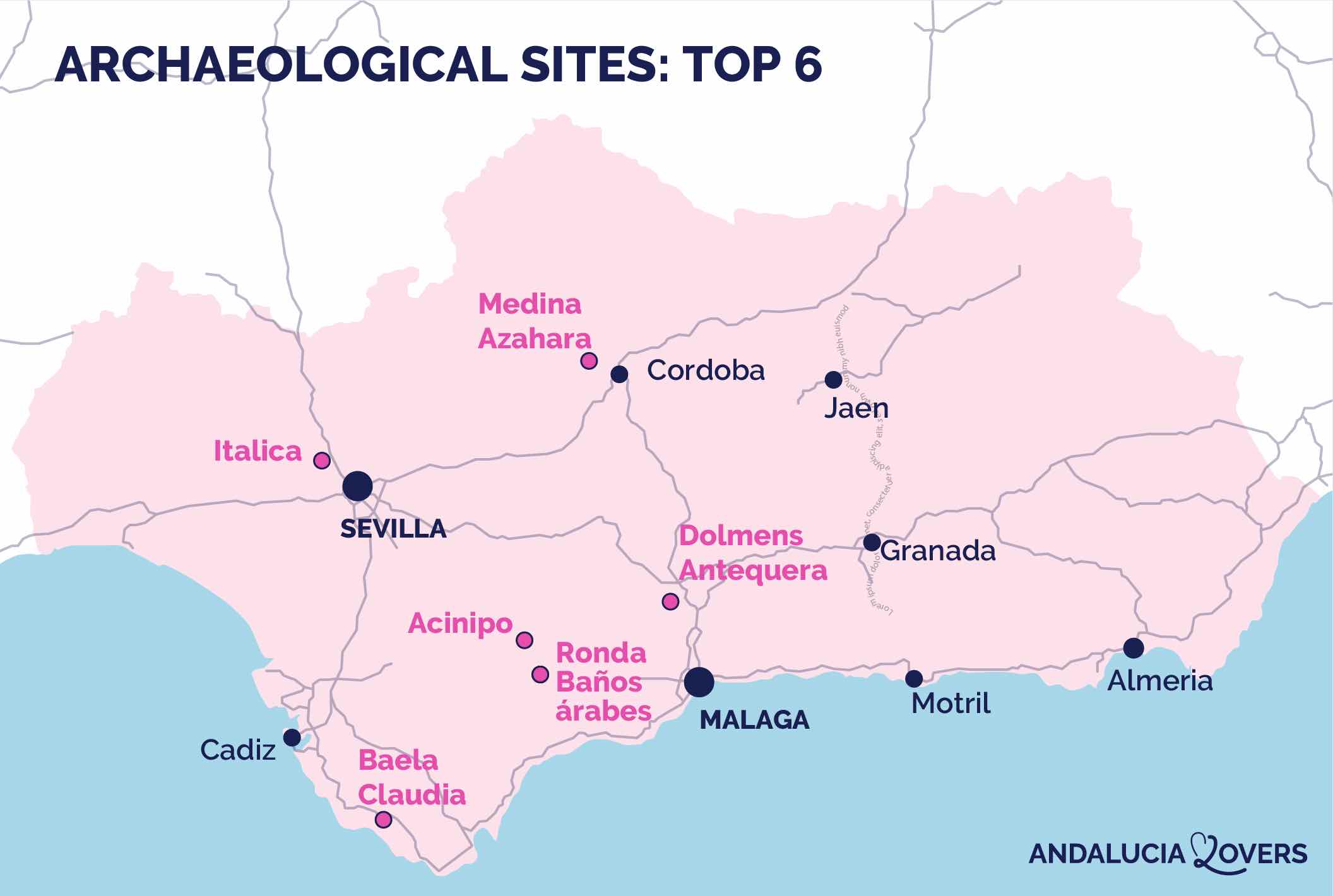
If you only need to do 3, we recommend it:
- Medina Azahara
- Italica
- Dolmens of Antequera
These are must-see places in Andalucia.
We’ll talk about the forts and the Alcázar at the end, but they aren’t the focus of this article.
1. Medina Azahara

Why visit? Our review
This is one of the places that surprised us the most, especially when you’re used to Roman ruins. Medina Azahara are the ruins of a vast palace-city built around 940. The city was built on three levels and was fortified. You can still admire some of its rich architectural features.
It was built on three levels and fortified, but it was destroyed during the civil wars of the 21st century; this site is a UNESCO World Heritage Site.
Learn more in our article about Medina Azahara.

Useful tips
- a 15-minute drive from Córdoba
- Duration of the tour: allow 2 hours
- The site includes staircases
- Full adult fare:
Free for EU residents
1.50 euros for everyone else
3 euros for the shuttle - Opening hours:
At least from 9 a.m. to 3 p.m., Tuesday through Saturday,
from 9 a.m. to 3 p.m. on Sundays
Closed on Monday - If needed, check out the latest information on the official website here.
- You can also book a guided tour to get the most out of the site— see the schedule and availability
WHERE TO STAY IN Andalucia
Our independent picks for the accommodation of your dreams:
Select by city:
- Best hotels in Sevilla
- Best hotels in Malaga
- Best hotels in Granada
- Best hotels in Cordoba
- Best hotels in Ronda
- Best hotels in Almeria
- Best Hotels in Cádiz
Select by hotel type:

2. Italica

Why visit? Our review
In the Santiponce region, north of Sevilla, you’ll find the ruins of a Roman city built around 206 B.C.: Itálica. We were amazed by the sheer size of this complex, which included an amphitheater that could seat 25,000 spectators. This testifies to the city’s economic and political importance during the High Roman Empire. In fact, it’s the birthplace of Emperors Trajan and Hadrian!
Itálica is also famous for its splendid mosaics. And we certainly agree. We were astounded by their excellent state of preservation. The mosaic of Bacchus and Ariadne particularly impressed us with the finesse of the figures’ execution.

Useful tips
- A 15- to 20-minute drive from Sevilla
- Allow 1 to 2 hours for the tour
- A fairly easy site to visit. A few steps to what you’re about to see
- Full adult fare:
Free for EU residents
1.50 euros for everyone else - Hours: at least from 9 a.m. to 3 p.m., closed on Mondays.
- If needed, check out the latest information on the official website here.
- There are many guided tours available from Sevilla that will let you relax, skip the lines, and learn more. See the options.
3. Antequera Dolmen

Why visit? Our review
For prehistory enthusiasts, the city of Antequera is home to three very different dolmens that are in excellent condition. It is one of the most significant examples of megalithic architecture in Europe and a UNESCO World Heritage Site.
We recommend visiting all three of them, as they are very different and date from different periods: the Menga Dolmen, the Viera Dolmen, and El Romeral.
You’ll discover our favorite, Menga, a giant chamber (27.5 m long and 6 m wide) whose entrance is aligned with the summer solstice. It is the oldest, built about 5,000 years ago.
Learn more in our dedicated article.

Useful tips
- In the town of Antequera, 50 minutes from Málaga and 1 hour and 15 minutes from Granada.
- Allow 1 hour to visit both sites
- Price:
Free for EU residents
1.50 euros for everyone else - Schedules:
Closed on Monday
Tuesday through Saturday: 9:00 a.m. to 2:30 p.m. / 8:00 p.m. to 9:30 p.m.
Sunday: 9:00 a.m. to 12:30 p.m. - The access is very well laid out, especially for Menga and Vieja
- If needed, check out the latest information on the official website here.
RENT A CAR IN Andalucia
- Compare prices on our preferred platform: DiscoverCars – one of the best rated sites.
- Choose a compact car, as some villages have very narrow streets!
- Think ofcomprehensive insurance for the same reason
- Book early for choice.

4. Baelo Claudia

Why visit? Our review
The most famous archaeological site on the Andalucian coast is Baelo Claudia, right next to the Bolonia Dunes. It is an ancient Roman city that began as a fishing village 2,000 years ago and was founded in the late 2nd century B.C.
We especially liked the temple with its many columns still standing.
What’s more, the landscape is a stunning combination of ruins, the sea, sand dunes, and even mountains!

Useful tips
- The small town of Bolonia, between Cádiz and Tarifa
- Allow 1 to 2 hours
- Archaeological site with unpaved surfaces, but no difficulties
- Full adult fare:
Free for EU residents
1.50 euros for everyone else - Hours: 9 a.m. to 3 p.m., closed on Mondays
- See the latest news on the official page here
5. Arab Baths of Ronda

Why visit? Our review
When you’re in Ronda, don’t forget to visit the Arab baths —they’re not in the city center! Dating from the 13th century, they are among the best preserved in Spain, with their vaulted rooms, intimate alcoves and brick columns. Body cleansing at the baths was a prerequisite for entry into the adjacent mosque, and we particularly enjoyed the video on how the baths worked in the past.
Learn more in our dedicated article.

Useful tips
- In the city of Ronda
- Allow 45 minutes to 1 hour
- Some stairs
- Adult price: €4.50
- Hours: Open from 10 a.m. to 6 p.m. (until 3 p.m. only on Saturdays and Sundays)
- (See any updates on the website here)
FUN in Andalucia: activities
- Cooking course in Sevilla
- Canyoning from the Costa del Sol
- Guided Hike on the Caminito del Rey

6. Acinipo

Why visit? Our review
Acinipo is a small archaeological site off the beaten path, but we really enjoyed it, especially the remains of the Roman theater, including part of a 1st-century CE wall and the still-visible seating tiers.
Another part of the ruins even dates back to a Bronze Age settlement.
The site also offers beautiful views of the countryside and the surrounding mountains.
They aren’t as big as the ones in Italica, near Sevilla, but if you go early, you might be almost the only one there!
Learn more in our dedicated article.

Useful tips
- A 30-minute drive north of Ronda; easy to get to
- Allow 45 minutes for the tour
- Sloping dirt floor
- Price: free of charge
- Hours: Closed on Mondays and Sunday afternoons—opening hours are normally from 10 a.m. to 5 p.m.
- Latest news on the official page here
7. Roman Theater of Cádiz

Why visit? Our review
The Roman theater is a surprise right in the middle of the city. It was excavated as recently as 1980. The theater was built in the 1st century B.C. and was the largest Roman theater. It could seat up to 10,000 spectators.
The stage and other parts of the theater have still not been excavated and remain beneath the city.
It’s a surprising experience—you walk through a small door on an ordinary street, and behind it, you discover this place!
Learn more in our dedicated article.

Useful tips
- In the city of Cádiz
- The museum, even though it’s small, is excellent. The signs are full of information.
Allow 30 minutes to 1 hour and 30 minutes, depending on your interests - Admission is free, but it is recommended that you reserve a ticket online in advance.
- Comment: Is this appropriate for children or not?
- Full adult price: free
- Opening hours:
Monday through Saturday: 10 a.m. to 4:30 p.m. in the winter and 11 a.m. to 5 p.m. in the summer
Sunday: 10 a.m. to 2 p.m.
Closed on some Mondays - (See any updates on the website here)

8. Roman Theater of Málaga

Why visit?
Just below the Alcazaba stand the ruins of a Roman theater, evidence of the empire’s presence in the late 3rd century B.C. This site is worth a quick detour to appreciate Málaga’s rich history, even if there isn’t much to explore beyond admiring the tiers of seats and visiting a small adjacent interpretive center.
Returning at sunset is highly recommended so you can appreciate the shimmering palette of colors that enhance the beauty of the stones. Finally, we found it fascinating to observe the interplay between the ruins and the surrounding buildings, particularly the Crystal Pyramid, which houses other archaeological remains.
Learn more in our dedicated article.

Practical advice
- In the city of Malaga
- Allow 15 to 30 minutes
- Accessibility: Access for people with disabilities (restrooms, ramps), except for access to the bleachers
- Price: Free
- Hours: Tuesday through Saturday from 10 a.m. to 6 p.m. and Sunday from 10 a.m. to 4 p.m.
- (See the latest news on the official website here)
9. Almunecar Fish Market

Why visit? Our review
The ruins of the Almuñécar fish market, located in El Majuelo Botanical Park, offer a fascinating glimpse into the region’s industrial past. We thought these were the most unique ruins in Andalucia!
These 2,500-year-old remains come from a once-thriving fish “factory” that produced salted fish and garum—a very popular fermented fish sauce—for export throughout the Roman Empire. The ruins date back to the Phoenician-Punic period in the 4th century B.C. and were expanded by the Romans.

Useful tips
- In the town of Almunecar, on the Costa Tropical
- A 1-hour drive from Málaga and a 1-hour drive from Granada
- Free access
- Allow 15 to 30 minutes
- Easy tour
10. Gorafe Megalithic Park

Why visit? Our review
And what we especially love is when history blends with breathtaking landscapes. This is the case near Gorafe.
The Gorafe Megalithic Park is one of the largest megalithic sites in Spain and Europe, with more than 240 dolmens spread across 11 necropolises along the Gor River. They date from the late Neolithic period to the Bronze Age (approximately 3000–1000 B.C.). About 37 dolmens have been restored and are open to visitors.
In addition to seeing these dolmens, you’ll enjoy magnificent views of the surrounding badlands.

Useful tips
- Free access
- Unpaved roads, but not difficult
- Allow 30 minutes to 2 hours, depending on your interest and how much you want to explore

It’s time to book!
Compare everything: airlines, prices, schedules, and availability.
And the many forts and alcazars…

And there are also forts, alcazars (fortified Arab palaces), and alcazabas (citadels of fortified cities) scattered throughout Andalucia.
The forts and alcazars of Andalucia offer a fascinating glimpse into the region’s rich history, with ruins dating from various eras. Many of Andalucia’s alcazars feature similar layouts with multiple walls, towers, and gates, which underscores the importance of defensive architecture in the region’s history.

- The Alhambra in Granada, a fortified complex and the most significant architectural remnant of the Moorish empire.
- The Alcazaba of Málaga, one of Spain’s best-preserved fortresses, features elements from the Roman, Phoenician, and Moorish periods.
- The Alcázar de los Reyes Cristianos in Córdoba, with Mudejar-inspired courtyards and gardens.
- The Alcazaba of Almería, built in 955 A.D., contains the ruins of residential quarters, baths, and a castle.
- Fortaleza de la Mota was a fortified town dating back to the 8th century, perched on a hill: its state of preservation makes it the perfect place to understand what life was like in medieval times
- See our list of the most beautiful ones.
Other Archaeological Sites and Ruins in Andalucia
Roman Ruins in Andalucia
- Cartama Aqueduct (Málaga)
- Roman Baths of Hedrionda (underwater)
- Roman Necropolis of Triotintot
- Bovedas Baths in Marbella
- Roman Sites in Carmona
- Brunel Villa in Jaén
- Roman Temple in Córdoba
- Torreparedones Archaeological Park

Moorish Ruins in Andalucia
- Almost all of the Alcazabas
Prehistoric Sites in Andalucia
- La Pileta Cave, Benaoján: a cave system containing prehistoric paintings and engravings
- Torre-La Janera, near Antequera—nicknamed the “Stonehenge of Andalucia”—is home to more than 500 menhirs, some of which are engraved, that were used for ritual and funerary purposes
Medieval Ruins in Andalucia
- Almodóvar del Río Castle: an 18th-century castle, originally of Moorish origin, that was rebuilt in the 14th century following the Christian reconquest. This is an example of medieval military architecture.
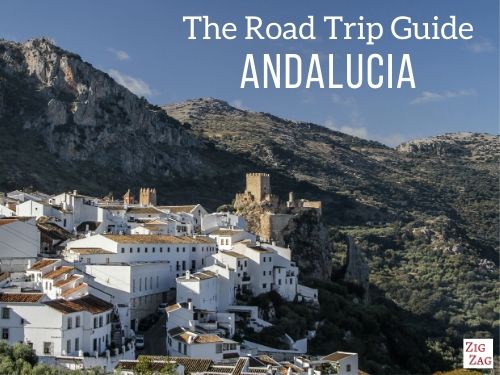
- Ruins of the Castle of Zahara de la Sierra: Perched atop a mountain, this castle was originally built by the Moors and later expanded by Christian rulers in the 15th century.

The Phoenician Ruins
- Gadir Archaeological Site: Beneath the streets of modern-day Cádiz, discover the ruins of the ancient Phoenician city of Gadir, including a necropolis and urban structures dating from the 9th century B.C. JC.
PLAN YOUR TRIP TO Andalusia
Inspiration

Practice
Places not to be missed