Andalucia is a region with so much to offer that you won’t have time to get bored. The hardest part is deciding which ones to choose—there are so many beautiful places.
Here is our selection of must-see attractions in Andalucia to help you decide!
This opinion is completely independent, based on our experiences. We made our own choices, visited the area anonymously, and paid our bills in full.
1. Major cities (Sevilla, Córdoba, Cádiz…)

Why it’s a must
During your stay in Andalucia, we strongly recommend that you visit several cities. They are all unique, offering a variety of cultural experiences, historical insights, and atmospheres: the bustling streets of Sevilla, the sophistication of Córdoba, a journey back in time in Granada, the peaceful charm of Cádiz…

Cities You Shouldn’t Miss:
- Córdoba, a city where history comes to life—not too big, with a charming downtown
- Sevilla, a lively city with a variety of neighborhoods brimming with beautiful architecture and musicians
- Cádiz, a city with a relaxing charm, constantly connected to the sea
- Ronda: A Blend of Nature and History
- Granada, with its historic old neighborhoods, offers a different kind of charm
- Malaga, a modern and dynamic city, the gateway to the Costa del Sol
- See our complete selection of the most beautiful cities in Andalucia.
2. The charm of the white villages (Frigiliana…)

Why it’s a must
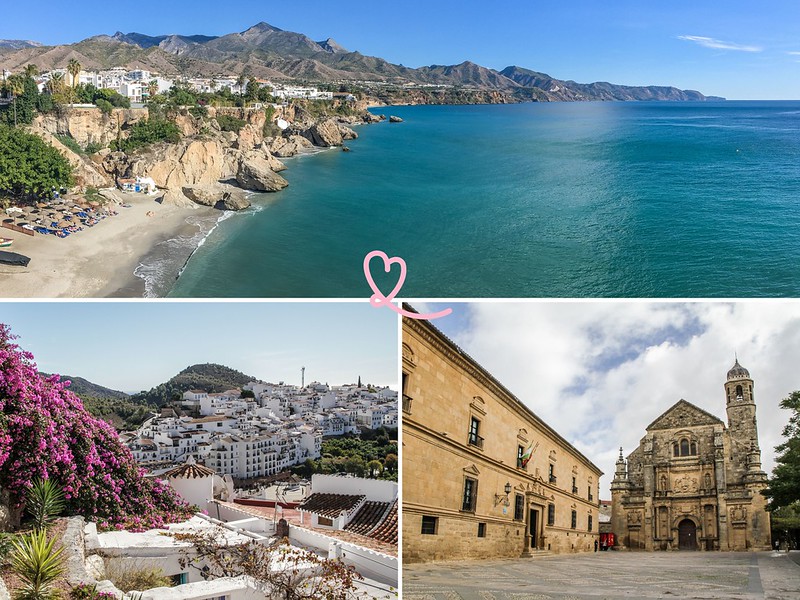
We recommend that you visit at least two white villages in Andalucia. Known as the Pueblos Blancos, they are characterized by their charming whitewashed buildings, tiled roofs, narrow cobblestone streets, and—often—breathtaking views.
The most famous region full of these villages is around Ronda. But there are also quite a few north of Cádiz.

White villages you shouldn’t miss:
- Setenil de las Bodegas, famous for its houses built into rock formations
- Frigiliana, nestled between the mountains and the sea, glistening in the sunshine
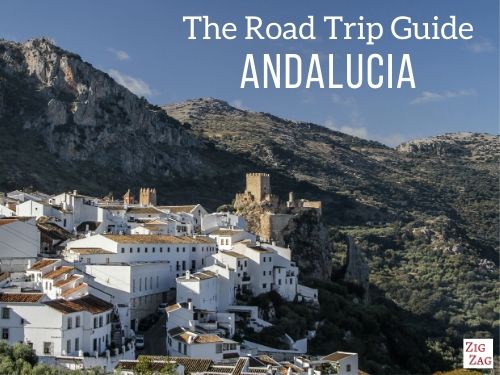
- Zuheros, tucked away from tourists in the heart of the mountains
- Grazalema is known for its local crafts and is surrounded by mountains
- See our complete selection of the most beautiful pueblos blancos in Andalucia.
3. Mudejar and Moorish architecture (alcazars, etc.)

Why it’s a must
Visiting several sites featuring Moorish and Mudejar architecture is also an excellent way to appreciate the rich diversity and evolution of these unique architectural styles. These architectural styles developed between the 8th and 16th centuries and combine Islamic and Christian elements.
Among other things, you’ll learn these typical techniques:
- Horseshoe-shaped arches
- Wooden coffered ceilings
- And lots and lots of decorative elements: geometric patterns, calligraphy, plant motifs…

Must-see buildings:
- The Royal Alcázar of Sevilla: exquisite Mudejar architecture, particularly in the Patio de las Doncellas
- The Alhambra in Granada, including, among other things, the famous Nasrid Palaces
- The Cathedral-Mosque of Córdoba
- Casa de Pilatos in Sevilla
- …
4. Renaissance Cities (Baeza, Úbeda…)

Why it’s a must
In Andalucia, you’ll discover cities that developed during different periods and therefore feature very different architectural styles. We recommend that you visit at least one typical Renaissance city. They offer a unique glimpse into Spain’s golden age in the 16th century, when the country was at the height of its political and cultural influence.
Wealthy families therefore built many buildings, and these cities exhibit a beautiful architectural unity.

Renaissance Cities You Won’t Want to Miss:
- Úbeda and its impressive collection of Renaissance buildings, particularly around Plaza Vázquez de Molina
- Baeza also boasts a wealth of Renaissance monuments, including the Cathedral of the Nativity of Our Lady. Baeza and Úbeda are listed as UNESCO World Heritage Sites.
- Carmona, one of the oldest cities in Europe, offering a glimpse into different eras, yet with a strong Renaissance influence
WHERE TO STAY IN Andalucia
Our independent picks for the accommodation of your dreams:
Select by city:
- Best hotels in Sevilla
- Best hotels in Malaga
- Best hotels in Granada
- Best hotels in Cordoba
- Best hotels in Ronda
- Best hotels in Almeria
- Best Hotels in Cádiz
Select by hotel type:

5. Geological Wonders (Torcal de Antequera…)

Why it’s a must
If, like us, you love striking rock formations and other geological wonders, Andalucia has some real gems in store for you. This natural heritage of Andalucia allows you to marvel at the forces that have shaped this diverse region over millions of years.

Geological wonders you won’t want to miss:
- Torcal de Antequera: an extraordinary collection of limestone formations, sculpted by millions of years of erosion. They often look like stacked pancakes!
- Cerro del Hierro: a natural monument in the northern part of the region, known for its karst landscape
- Cueva del Gato: a cave system with underground rivers and waterfalls
- The Bolonia Sand Dune
- ….
6. Variety of beaches (Costa del Sol, Costa de la Luz, etc.)

Why it’s a must
The Andalucian coast offers a wide variety of beaches, whatever your preferences: wide beaches with fine sand, small coves nestled beneath cliffs, secluded beaches, or pebble beaches…there’s something for everyone!
Each coastline offers a unique atmosphere and breathtaking scenery, making it an essential part of any visit to Andalucia.

Beaches You Can’t Miss:
- The Costa del Sol, the best-known part of the Spanish coast, with its sunny climate, vibrant beach culture, and lively towns. Its sandy beaches offer plenty of amenities and a lively atmosphere.
- The Costa de la Luz, which stretches from Huelva to Cádiz, is known for its unspoiled beaches with fine sand and is popular with windsurfers.
- The Costa Tropical: with its lush vegetation, small cliffs, and mix of sand and pebbles.
- Cabo de Gata: a mix of wild beaches and volcanic landscapes
- See our selection of the most beautiful beaches in Andalucia
RENT A CAR IN Andalucia
- Compare prices on our preferred platform: DiscoverCars – one of the best rated sites.
- Choose a compact car, as some villages have very narrow streets!
- Think ofcomprehensive insurance for the same reason
- Book early for choice.

7. Cuisine (tapas…)

Why it’s a must
Enjoy Andalucian cuisine, especially its famous tapas… Andalucia’s culinary scene is rich, varied, and deeply rooted in local traditions, making it an important part of the cultural experience. Whether it’s a casual meal at a local bar or a food festival, Andalucia’s culinary delights are an essential part of your trip.

Must-try cuisine:
- Tapas: an iconic Andalucian tradition based on the concept of sharing small portions of food. Of course, we couldn’t resist this delightful tradition
- Wine and sherry: Andalucia is also renowned for its wines, particularly sherry from Jerez.
- Regional Specialties: The different regions of Andalucia each have their own specialties. For example, Huelva is known for its strawberries and seafood, while Cádiz is famous for its fried fish and shellfish.
- See our selection of the best restaurants in Andalucia
8. Archaeological sites (Italica…)

Why it’s a must
In Andalucia, you can explore a wide variety of archaeological sites and ruins spanning various historical periods. There are a particularly large number of Roman ruins, including well-preserved cities such as Italica, near Sevilla, and Baelo Claudia, on the coast.
There are also prehistoric sites, including ancient caves and Neolithic settlements.
You’ll also find sites with Moorish influences and numerous medieval Christian and Islamic fortifications.

Ruins You Shouldn’t Miss:
- Medina Azahara, the ruins of a vast palace-city built around 940
- Italica, the ruins of a Roman city built around 206 B.C., featuring an amphitheater that could seat 25,000 spectators and beautiful mosaics
- The dolmens of Antequera, which are very well preserved
- Baelo Claudia, an ancient Roman city that began as a fishing village 2,000 years ago
- See our complete selection of the most fascinating archaeological sites in Andalucia.
9. Hiking (Camino del Rey…)

Why it’s a must
The varied landscapes—from rugged mountains to peaceful coastal trails—make Andalucia a paradise for outdoor enthusiasts (except in the height of summer, when it gets a little too hot for hiking in some areas).
You’ll be able to reconnect with nature, admire the photo, and discover the diversity of ecosystems.

Hikes You Won’t Want to Miss:
- Caminito del Rey: This iconic trail is famous for its spectacular scenery and thrilling walkways suspended above the gorge.
- Sierra Nevada, for its high mountains
- Sierra de Carzola, with the Rio Borosa and its lush vegetation
- The badlands around the Tabernas Desert
FUN in Andalucia: activities
- Cooking course in Sevilla
- Canyoning from the Costa del Sol
- Guided Hike on the Caminito del Rey

10. Cathedrals (Córdoba, Cádiz…)

Why it’s a must
In Andalucia, you can explore a wide variety of cathedrals that reflect the region’s rich history and cultural influences. Each of the region’s eight provinces has its own cathedral. Some are huge, and others are smaller.
These structures feature a variety of architectural styles, ranging from Gothic to Renaissance, including Baroque and Neoclassical, whose elements often blend together due to the long periods of construction.

Cathedrals You Can’t Miss:
- The Mosque-Cathedral of Córdoba, with its famous arches
- The immense Sevilla Cathedral (the third-largest cathedral in the world and the widest of all Gothic cathedrals)
- The elegant Cádiz Cathedral, built in a very different style
- See the list of cathedrals in Andalucia.
11. Caves (Nerja…)

Why it’s a must
Exploring caves is often a favorite activity for the whole family (except for those who are claustrophobic…). These sites offer a unique opportunity to immerse yourself in the region’s geological and cultural richness and to see landscapes that you don’t get to admire every day. The sculptures created by nature are truly exceptional!
Plus, it’s a chance to cool off when it gets too hot.

Caves You Shouldn’t Miss:
- The Nerja Caves, renowned for their impressive stalactites and stalagmites, as well as for their vast caverns that stretch for more than 4 kilometers
- The Aracena Caves, also known as the Gruta de las Maravillas (Cave of Wonders), are famous for their stunning underground lakes and intricate rock formations.
12. Cave Dwellers (Guadix…)

Why it’s a must
A visit to the Guadix region and its cave dwellings is one of the area’s most fascinating attractions. It is one of the largest concentrations of cave dwellings in Europe. Carved into the soft clay hills, they create a surreal landscape amid the ochre hills.
The caves have been used for centuries, and many of them are still inhabited today, providing a living link to the past. The region has about 2,000 cave dwellings, in which nearly 3,000 people still live.

Cave dwellings you won’t want to miss:
- the extensive network of cave dwellings in Guadix
- The small village of Marchal, carved into the mountain
- the village of Gorade, surrounded by the Badlands
13. Museums (Fine Arts, Picasso, etc.)

Why it’s a must
Be sure to visit Andalucia’s famous museums as well. They offer a rich exploration of its diverse cultural heritage, its artistic achievements, and its historical significance. The collections are diverse: flamenco, archaeology, fine arts, sacred art…

Must-see museums:
- Sevilla Museum of Fine Arts, with an impressive collection of works ranging from the medieval period to the early 20th century
- Carmen Thyssen Museum (Málaga), a collection of 19th-century Spanish paintings, with a special focus on Andalusian art
- Picasso Museum (Málaga): Dedicated to the works of Pablo Picasso, who was born in Málaga
- Archaeological Museum of Córdoba, featuring artifacts from all eras
- See our selection of the best museums in Andalucia
14. Architectural Surprises (Ronda Bridge, Las Setas…)

Why it’s a must
We’ve talked a lot about cathedrals, cities, villages, and fortresses. But sometimes there are also architectural surprises that don’t fit into any category, so we’re sharing those with you too—so you don’t miss them!

The moments that surprised us the most:
- The Pont Neuf in Ronda: Built in the 18th century, this majestic bridge, with its multiple arches, spans the spectacular Tajo Canyon, connecting the medieval medina to the more modern part of Ronda.
- “Las setas” in Sevilla is a nickname given to the Metropol Parasol because of its mushroom-like shape. The 150m x 75m, 28m-high wooden structure, supported by six pillars, was designed by German architect Jürgen Hermann Mayer.
- Centre Pompidou Málaga: This contemporary art museum is known for its colorful “Cubo,” a cubic glass structure designed by Daniel Buren
- Plaza de España in Sevilla: Although it is well-known, this semicircular square, with its bridges and colorful azulejos, remains an impressive architectural surprise.
15. Volcanic Landscapes (Cabo de Gata)

Why it’s a must
Exploring the Cabo de Gata Natural Park offers you a unique and captivating experience. The Cabo de Gata Natural Park has an arid climate and volcanic geological formations (formed between 15 and 16 million years ago), creating a rare and fascinating landscape to explore.
The park boasts the longest stretch of unspoiled coastline in Andalucia. Visitors can explore enchanting beaches, steep cliffs, and crystal-clear waters.

Highlights not to be missed:
- The view of Playa de los Muertos
- All the roads with the old volcanoes
- The Cabo de Gata Lighthouse and its rugged coastline
- The Villages in the Heart of the Park
- Discover Cabo de Gata
16. Desert Landscapes (Tabernas)

Why it’s a must
The Tabernas Desert, covering an area of approximately 280 km2, is considered the only true desert in Europe. The region features a spectacular badlands landscape, characterized by deeply eroded ravines, dry riverbeds, and striking rock formations.
In addition, the desert has served as the backdrop for many films, particularly Westerns, earning it the nickname “Andalusian Hollywood.” You can explore former film sets and discover the landscape that has captivated filmmakers for decades.

Desert experiences you won’t want to miss:
- The Ravines
- Movie sets, such as Fort Bravo (Texas Hollywood)
- The Badlands around Gorafe
- Hiking,
- 4WD excursions…
17. Culture, music, and dance (Flamenco…)

Why it’s a must
You can also experience the local music and dances, especially flamenco. There are many experiences that allow you to immerse yourself in the region’s rich cultural heritage and vibrant artistic expressions.

Cultural highlights you won’t want to miss:
- Flamenco, with performance venues in all major cities. He embodies the spirit and emotions of the Andalusian people
- Musicians on every street corner, especially in Sevilla
- Bullfighting: In several cities, you can visit bullrings and learn more about this tradition.
18. National Parks (Sierra Nevada, Doñana…)

Andalucia has 3 national parks.
Doñana National Park
Doñana is one of Europe’s most important wetlands and a UNESCO World Heritage Site. It is home to a wide variety of ecosystems, including marshes, dunes, and forests. If you enjoy birdwatching, you’ll see a wide variety of wild birds there.
Sierra Nevada National Park
The best known of the three. It is a mountainous park that is home to the highest peaks in mainland Spain, including Mulhacén and Veleta. The park is a paradise for outdoor enthusiasts, who can enjoy activities such as hiking, skiing, and mountain biking there.
The park is rich in biodiversity, with many endemic plant and animal species. It is particularly well known for its alpine flora

Sierra de las Nieves National Park
This is the most recent one. The Sierra de las Nieves is known for its rugged terrain, limestone formations, and lush forests. It features a variety of habitats, including Mediterranean forests and unique karst landscapes.
And traveling abroad: Gibraltar
From Andalucia, you can also explore the Rock of Gibraltar, which combines breathtaking natural beauty, a rich history, and great cultural diversity.
The region offers a fascinating blend of British and Spanish influences, evident in its architecture, cuisine, and local traditions.

Discover great offers on our preferred car rental platform: DiscoverCars
Frequently asked questions
Free Attractions in Andalucia
- Enjoy the beaches
- Hiking
- Visit the white villages
- Listen to the musicians on the streets
- Many archaeological sites are free for European residents, and only 1.50 euros for everyone else!

Secret Places in Andalucia
- Cerro del Hierro is in the north, far from the tourist spots; there are plenty of locals but far fewer foreign tourists.
- The Village of Zuheros
- Acinipo Archaeological Site
- The Village of Gorafe
Things to Do in Andalucia Without a Car
- Use Sevilla as a base to explore the city and visit nearby areas by train or on a guided tour (Italica, Córdoba, Ronda, the white villages…)
- Use Málaga as a base to explore the city, enjoy the beaches, and visit nearby attractions by train or on a guided tour (Caminito del Rey, the white villages, Ronda…)
- A Train Tour of Major Cities: Seville, Córdoba, Granada, and Málaga
Romantic Activities in Andalucia
- Take a walk along the beautiful, unspoiled beaches of Cabo de Gata
- Watch the sunset at Plaza de España in Seville and see the building’s lights come on
- Strolling through the narrow streets of Baeza and around the town, taking in the views in the evening after the tourists have left

Most Visited Places in Andalucia
- Alhambra in Granada
- Mosque-Cathedral of Córdoba
- The Alcázar of Sevilla
What to Do in Andalucia When It’s Too Hot
- Hiking in the Sierra Nevada Mountains
- Descend into the underground caves
- Visiting museums
What to Do in Andalucia When It Rains
- Visiting museums
- Descend into the underground caves
- Be sure to explore the white villages anyway—they’re just as charming in the rain, and there are fewer people!
PLAN YOUR TRIP TO Andalusia
Inspiration

Practice
Places not to be missed