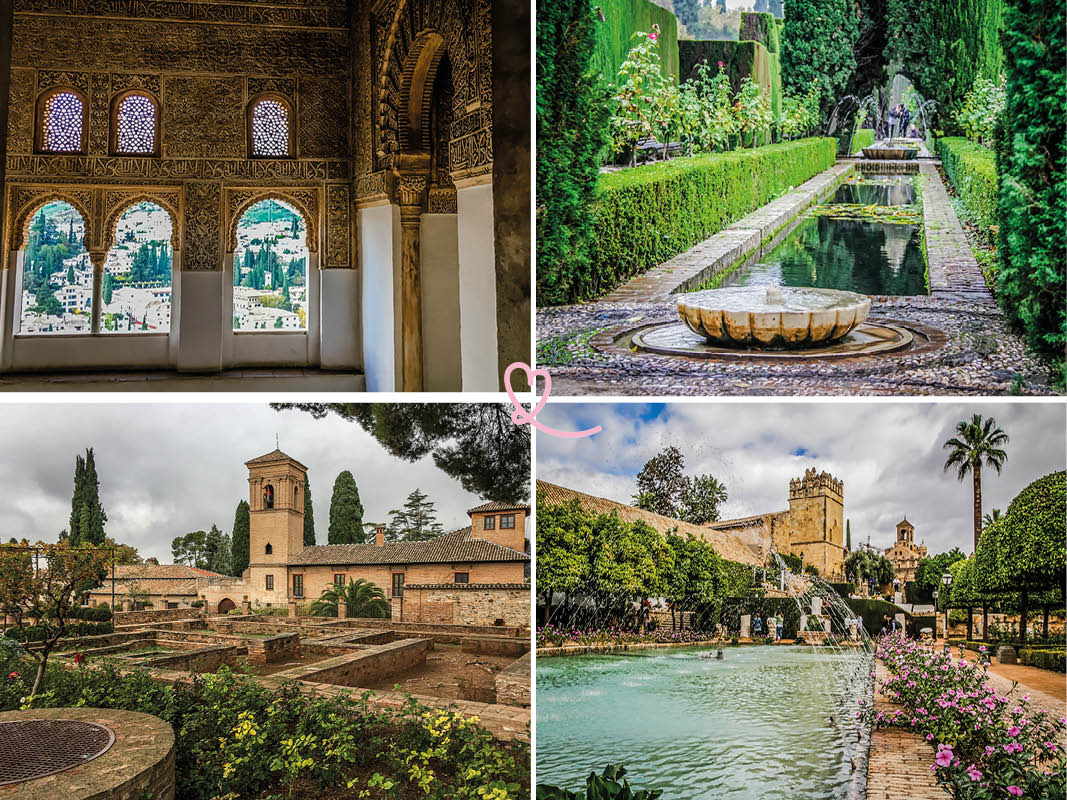
In the heart of southern Spain, Andalucia is a land of contrasts that has endured through the ages and across civilizations. History has left its mark here in the form of majestic castles and palaces. From Granada to Sevilla, via Córdoba—not to mention the surrounding towns and villages—the architectural gems of this region won us over. These marvels revealed a unique story to us and bear witness to a rich Moorish and Christian past that transported us.
Here is our selection of the best castles and palaces in Andalucia, along with our helpful tips illustrated with photos!
This opinion is completely independent, based on our experiences. We made our own choices, visited the area anonymously, and paid our bills in full.
The Best Castles and Palaces in Andalucia: Tips
In Andalucia, you’ll find buildings that are thousands of years old and have stood the test of time and civilizations. But there’s much more to do in the region (see our guide). If you can only visit three castles and palaces, we recommend:
- Alhambra Fortress – A fortified Moorish palace complex dating from the 8th century during the Nasrid dynasty – buy a ticket
- Alcázar of the Christian Monarchs in Córdoba —a palace featuring Roman, Visigothic, and Moorish ruins, as well as stunning gardens and Mudéjar-style patios— buy tickets
- Almodóvar del Río Castle – A beautifully preserved 8th-century fortress on a hill where a Roman fort once stood – buy a ticket

If you’re visiting castles and palaces in Andalucia’s major cities, opt for the hop-on, hop-off sightseeing buses that stop at all the major attractions, such as those in Córdoba or Sevilla.
If you’re exploring the villages and driving through the countryside, renting a car is still the best option.
1. The Alhambra Fortress and the Nasrid Palaces in Granada

Why visit? Our review
Did you know that the Alhambra is the most visited monument in Spain? Perched on a hill, this 8th-century palatial complex stands out majestically against the backdrop of the snow-capped mountains of the Sierra Nevada. Surrounded by 2200m of ramparts, it features several palaces. Built during the Nasrid dynasty, it is a jewel of Andalusian Moorish heritage that captivated us with its architecture, its vastness, and its gardens.
The Nazrid Palaces, dating from the 13th century, are the most famous. During your visit, please be careful not to touch the decorative ornaments, as they tend to go missing. Not far from there, you can visit the Alcazaba, an 11th-century fortress.
More photos in our article.

Location
- In Granada, on Sabika Hill
- From Sevilla = 2 hours and 45 minutes by car
- From Córdoba = 2 hours and 20 minutes by car
- Directions: We recommend taking the shuttle bus to the Alhambra. The walking trail is an uphill climb that can be tiring, especially in the summer. The site is easily accessible by bus (C30, C32, C35—visit the Granada public transportation website here). If you’re coming by car, please note that there are several parking lots available.
- This place might be worth visiting with the family to soak up the Hispano-Moorish history and enjoy the beauty of the gardens. This helps spark the curiosity of younger visitors and allows them to discover one of Andalucia’s most important buildings in a fun way. You can include this tour in a scavenger hunt that will appeal to both kids and adults!

Useful tips
- Duration of visit: Plan on at least half a day, but we recommend a full day instead.
- Difficulty: Route accessible to people with limited mobility (downloadable from the official website here); no particular difficulties, but navigation is somewhat complex. Be sure to bring a map and pay close attention to the signs!
- Book your ticket now
- Full adult price: full-site tour, 22€ (see all prices here)
- Hours: Open daily from 8:30 a.m. to 6:00 p.m. from October 15 to March 31, and from 8:30 a.m. to 8:00 p.m. from April 1 to October 14 (check the official website here for any updates)
WHERE TO STAY IN Andalucia
Our independent picks for the accommodation of your dreams:
Select by city:
- Best hotels in Sevilla
- Best hotels in Malaga
- Best hotels in Granada
- Best hotels in Cordoba
- Best hotels in Ronda
- Best hotels in Almeria
- Best Hotels in Cádiz
Select by hotel type:

2. The Palace of Charles V and the Generalife in the Alhambra

Why visit? Our review
In the 16th-century Palace of Charles V, you’ll notice that it houses two museums. First, the Alhambra Museum, with its magnificent collection of Hispano-Moorish artworks and artifacts from the Umayyad to the Nasrid periods—a legacy spanning the 8th to the 15th centuries. Look up to admire the elaborate wooden ceilings and plastered walls.
Next, the Granada Museum of Fine Arts, located on the first floor of the Palace of Charles V, is an artistic treasure that will leave you speechless. In this building, which features dozens of exhibition halls and was inaugurated in the 19th century, immerse yourself in the 2,300 artifacts on display. Stroll among paintings and sculptures from the 15th to the 20th century by artists native to Granada, such as Alonso Cano and Mariano Fortuny.
It offers a fascinating journey through the history of Spanish art, with sections dedicated to the Renaissance, the Granada Baroque, and avant-garde movements. And what better setting for these masterpieces than the Renaissance-style Palace of Charles V, nestled within an exceptional historic site from the Nasrid dynasty?
The Generalife, meanwhile, is located just before the exit; it’s one of our favorites. This summer palace has magnificent gardens!

Location
- In Granada, in the heart of the Alhambra palace complex on Sabika Hill
- From Sevilla = 2 hours and 45 minutes by car
- From Córdoba = 2 hours and 20 minutes by car
- Challenges and Access: See the information above in the Alhambra section
Useful tips
- Duration of visit: 1 hour and 30 minutes for the museum, and between half a day and a full day for the entire historic site
- There is no specific tour route designed for children, but viewing works of art can foster cultural and artistic awareness, help children adapt to a new environment, and provide intellectual stimulation for the whole family
- Full adult price: €1 .50 (free for European Union citizens)
- Hours of operation: Tuesday through Saturday from October 15 to March 14, 9 a.m. to 6 p.m.; March 15 to June 15, 9 a.m. to 8 p.m.; from June 16 through September 15, as well as on Sundays, holidays, and Mondays preceding holidays, from 9 a.m. to 3 p.m.; from September 16 through October 14, from 9 a.m. to 8 p.m. (see the official website here for any updates)
- Save time and buy your combined ticket for the Alhambra, Nasrid Palaces and Charles V Palace here!
3. Alcázar of the Christian Monarchs in Córdoba

Why visit? Our review
The Alcázar of the Christian Monarchs in Córdoba is by far one of our favorite palaces in Andalucia. Did you know that this little-known gem in Córdoba was built in the 14th century by King Alfonso XI? This fortress-palace stands on the ruins of a Visigothic fortress and a Moorish palace. Take the time to admire the details of its Mudéjar architecture, a unique blend of Moorish and Renaissance elements. You’re sure to be fascinated!
This place served as a royal residence, a prison, and the headquarters of the Inquisition. We especially enjoyed the freedom to explore its various sections and take in the unique panoramic views of Córdoba. The Alcázar is a living testament to Andalucia’s rich and complex history—a must-see that you should definitely add to your list.
See more photos.

Location
- In Cordoba’s historic district near the Guadalquivir river, 10 minutes’ walk from the cathedral mosque
- From Sevilla = 1 hour and 40 minutes by car
- From Granada = 2 hours and 10 minutes by car
- Directions: Located in the heart of the historic district, easily accessible by tourist bus— buy your ticket

Useful tips
- Duration: Allow 2 hours for the entire site, or a little less if you don’t visit the gardens
- Challenges: a few flights of stairs to climb to visit the towers; the gardens are generally accessible; most of the informational signs are in Spanish (opt for a guided tour to get the most out of your visit—see here)
- Admission to the Alcázar of the Christian Monarchs is free for children 13 and under. There isn’t a specific trail for children, but the place is full of charm and quite magical, with its fountains, gardens, and fortified towers
- Full-price adult ticket: 6€
- Hours: Open Tuesday through Friday from 8:15 a.m. to 8:00 p.m., Saturdays from 9:30 a.m. to 6:00 p.m. from mid-September to mid-June, and Sundays and holidays from 8:15 a.m. to 2:45 p.m.; from mid-June to mid-September, Tuesday through Sunday from 8:15 a.m. to 2:45 p.m.; closed on Mondays (see the official website here for any updates)
- Save time and buy your ticket!
RENT A CAR IN Andalucia
- Compare prices on our preferred platform: DiscoverCars – one of the best rated sites.
- Choose a compact car, as some villages have very narrow streets!
- Think ofcomprehensive insurance for the same reason
- Book early for choice.

4. Almodóvar del Río Castle

Why visit? Our review
Get ready for a medieval adventure at the Almodóvar del Río Castle! Perched on a hill in the Andalusian village of the same name, this gem of military architecture has stood watch since the 8th century, surrounded by a moat and walls. We enjoyed soaking up the atmosphere of days gone by in this small, well-preserved fortress, which served as a royal residence, a prison, and a repository for great riches.
The Gothic chapel will amaze you with its magnificent frescoes. Be sure to climb to the top of the towers to enjoy the panoramic views. “Game of Thrones” fans, did you know that the castle was used as a filming location for the series? Inside, a 20-minute film will take you on a journey through its fascinating history, from the Umayyad conquests to the 20th-century restorations. The icing on the cake: we drove around the city to admire the fort from every angle.

Location
- In the village of Almodóvar del Río, in the heart of the Sierra del Hornachuelos Natural Park
- From Córdoba = 40-minute drive
- From Sevilla = 1 hour and 30 minutes by car
- From Granada = 2 hours and 30 minutes by car
- Directions: Parking with limited spaces at the top; arrive early to find a spot. Otherwise, you’ll have to park at the foot of the hill and then walk up for about 15 minutes.
By public transportation, buses run between the central bus station and the castle; the trip takes about 30 to 45 minutes.
Useful tips
- Duration of the tour: Allow between 1.5 and 3 hours, depending on your interest
- Challenges: There are several steps to climb; be sure to wear appropriate shoes and bring something to drink. If you’re visiting with young children, opt for a baby carrier rather than a stroller
- There is no specific tour for children, but it’s a fun place to learn about aspects of medieval life in the region
- Full adult price: €10
- Hours of operation: Open from October through March, Monday through Friday from 11:00 a.m. to 2:30 p.m. and 4:00 p.m. to 7:00 p.m.; Saturdays, Sundays, and holidays from 11:00 a.m. to 7:00 p.m.; from April through May and in August and September, Monday through Friday from 11 a.m. to 2:30 p.m. and 4 p.m. to 8 p.m.; Saturdays, Sundays, and holidays from 11 a.m. to 8 p.m.; From June through July, Monday through Friday from 9:00 AM to 3:30 PM; Saturdays, Sundays, and holidays from 11:00 AM to 8:00 PM (see the official website here for any updates)
- Save time and buy your ticket now!
5. The Real Alcázar in Sevilla

Why visit? Our review
Don’t miss the Alcázar in Sevilla! Did you know that the word “alcazar” means “palace” in Arabic? In fact, tickets to this unique venue must be reserved well in advance, as the building is particularly popular. Designated a World Heritage Site in 1987, this complex of palaces, courtyards, and gardens has been renovated by various monarchs over the years.
Construction began in the 10th century, but it was not until four centuries later that the magnificent Mudéjar-style decorations were added. We loved looking at them. Don’t miss the Galería del Grutesco, which overlooks the buildings and lush, exotic gardens. It’s one of our favorite spots in Sevilla!
See more photos in our article.

Location
- In the historic center of Sevilla, behind the cathedral
- From Granada = 2 hours and 50 minutes by car
- From Córdoba = 1 hr 45 min drive
- Directions: It is located in the Santa Cruz neighborhood. The “Puerta Jerez” stop on Metro Line 1 is about a ten-minute walk away

Useful tips
- Duration: Allow half a day for the tour
- Challenges: With the exception of the royal apartments, most of the rooms are on the ground floor and do not present any particular challenges.
- Admission to the Real Alcázar in Sevilla is free for children 13 and under. There isn’t a specific tour route, but it’s an interesting educational experience in a beautiful setting that introduces visitors to the history of Andalucia.
- Book your tour now
- Full adult admission: €15.50; allow an additional €5.50 for a tour of the royal apartments
- Hours: Open Monday through Sunday from 9:30 a.m. to 7:00 p.m. (summer hours) or from 9:30 a.m. to 5:00 p.m. (winter hours) (see the official website here for any updates)
6. Alcazaba of Antequera

Why visit? Our review
The Alcazaba of Antequera stands proudly on the hills above the town of the same name. It’s an iconic place that we think is worth a visit. From the imposing keep of this 14th-century Moorish fortress, take in the breathtaking panoramic view of the city and the mountains in the background. Its sturdy walls have long protected the city, earning it the nickname “fortified city.”
Within the walls of the Alcazaba, you’ll discover remnants and ruins from the Roman, Moorish, and Christian eras—every stone tells a story! Don’t miss the chance to climb the keep, where the region’s largest bell—installed in 1582—hangs. Please note that when it rings, the noise can be quite deafening.
Take the time to stroll along the ramparts, admire the characteristic rectangular architecture, and step back in time with the audio guide.

Location
- In the city of Antequera
- South-east of the city, 15-20min walk from the historic center, on a hilltop
- From Sevilla = 1 hour and 45 minutes by car
- From Málaga = 50-minute drive
- Directions: The best way to get there is still by car, though it is possible to walk there from downtown
Useful tips
- Duration of the tour: 1 to 2 hours, depending on your interest
- Challenges: Expect plenty of walking uphill—sometimes steep—with a few places to rest along the way
- There isn’t a specific tour for children, but it’s an informative visit; however, the climb to get there can be difficult for younger children
- Full adult price: €8, including admission to the Royal Collegiate Church of Santa Maria
- Hours: Open daily from 10 a.m. to 6 p.m. (Check the Antequera Tourist Office website here for any updates)
7. La Mota Fortress

Why visit? Our review
Perched atop a hill, we were captivated by the Fortaleza de la Mota and its breathtaking views of the Sierra Nevada. The place was an ancient city, so there are plenty of beautiful sights to see there, and with fewer tourists, which made our experience all the more exciting.
Take a deep breath of fresh air in the Andalucian countryside while visiting one of the region’s historical and scenic gems. Built during the Moorish period in the 8th century, this fortified city reached its architectural peak during the reign of the Nasrid dynasty in the 12th and 13th centuries. Its strategic location between Granada, Jaén, and Córdoba made it a key hub during the Reconquista—interesting, isn’t it? Today, you’ll see that the fortress has been beautifully restored to immerse you in its medieval atmosphere.
To better understand its heritage and history, we strongly recommend taking an audio-guided tour and watching the short film shown in the Renaissance-era church! Be sure to take a walk along the imposing ramparts as well.

Location
- In the town of Alcalá la Real (Province of Jaén)
- From Sevilla = 2 hours and 30 minutes by car
- From Málaga = 2-hour drive
- Directions: The best way to get there is by car; there is free parking near the ticket office.

Useful tips
- Duration: 2h
- Challenges: Located at the top of a hill, so there’s a fairly steep climb, and you’ll need to walk quite a bit to fully explore the area. Please note that pets are not allowed.
- There isn’t a specific tour designed for children, but since the site and all its points of interest are very well preserved, a family stroll will allow the youngest visitors to immerse themselves in the region’s medieval history in a life-size “setting”! Admission is free for children under 6 and reduced for children ages 7 to 16 (€4)
- Full adult price: €8
- Hours: Open daily from mid-October through the end of March from 10 a.m. to 6 p.m., and from April through mid-October from 10 a.m. to 7:30 p.m. (Check the city’s tourism office website here for any updates)
- Save time and book your guided tour
FUN in Andalucia: activities
- Cooking course in Sevilla
- Canyoning from the Costa del Sol
- Guided Hike on the Caminito del Rey

8. Alcázar of Jerez de la Frontera

Why visit? Our review
Located in the heart of the city of Jerez, the Alcázar really captivated us! A testament to the region’s historical evolution—from the Almohad dynasty to the Catholic monarchs—this fortified site, built in the 12th century, left us speechless. We were pleasantly surprised to find that its cisterns and Arab baths were so well preserved. Take a stroll along the fortified walls, admire the architectural evolution, and visit the Santa Maria La Real Chapel, a former mosque. You’ll surely notice the Villavicencio Palace, which dates back to the 17th century. The Camara Oscura is located there, featuring exhibits on darkrooms around the world and guided tours. It houses a former pharmacy. A striking contrast to the original fortress. Join us on a journey through the centuries!

Location
- in the city of Jerez de la Frontera
- From Cádiz = 30-minute drive
- From Sevilla = 1 hr 15 min by car
- Directions: The best way to get to the Alcázar of Jerez is on foot from downtown; you can park in a paid parking lot outside the city center.

Useful tips
- Duration: Allow 1 to 2 hours, depending on your interest
- There aren’t any specific activities for families, but the visit can be fun and educational—just keep in mind that the climbs can be challenging with children.
- Challenges: To visit the towers and ramparts, be prepared for a steep climb (or even rock climbing), and for the Camera Obscura in the Villavicencio Palace Tower
- Full adult price: €3 for the Alcazar alone, €5.40 for the Alcazar and the Camara Oscura
- Hours: Open daily from October through June from 9:00 a.m. to 3:00 p.m.; from July through September from 9:30 a.m. to 6:00 p.m. (see the Tourist Office website here for any updates)
9. Alcazaba of Almería

Why visit? Our review
This fortress is one of the most impressive monumental medieval defensive ensembles in al-Andalus. Just like us, you’ll be captivated by its vast and remarkable architecture, its well-preserved ruins, and its incredible views, especially of the Jayrán Wall.
Built in the 11th century, this line stretches all the way to the Colline de San Cristóbal, from where you can see the image of the Sacred Heart of Jesus on a large plinth, a marble by Macael, built in the 20th century.
See more photos.

Location
- In the city of Almería, in eastern Andalucia, on the coast
- Directions: The Alcazaba is located on the hills above Almería, on Calle Almanzor. It’s just a few minutes’ walk from downtown.

Useful tips
- Tour duration: 2 hours
- Hours: Tuesday through Saturday from 9 a.m. to 6 p.m. and Sunday until 3 p.m. During peak season, the site stays open until 9 p.m., giving you the chance to enjoy a spectacular sunset!
- Visitor Information: There is no wheelchair access, and be sure to wear sturdy shoes, as some of the surfaces are uneven and cobblestone.
- Price: Free for EU citizens (see the latest information on the official website here
- Other tips: Be sure to bring something to protect yourself from the sun, since much of the tour takes place outdoors; conversely, if it’s cold, bring a scarf because the site is exposed to the wind. Finally, we strongly recommend booking a guided tour, as the on-site educational resources are insufficient given the site’s historical significance. Book your guided tour now here!
10. Alcazaba of Málaga

Why visit? Our review
If you’re visiting Málaga, you can’t miss the Alcazaba, a Muslim fortress built in the 11th century. From Alcazabilla Street, you’ll first admire its imposing appearance before exploring the maze of doors and nooks that make up its interior.
Despite the crowds, we loved the charming Arab gardens with their fountains, the ruins of the Nasrid Palace, and the few preserved archaeological artifacts. And let’s not forget the panoramic view from the ramparts!
See more photos in our article.

Location
- In the city of Malaga
- From Sevilla = 2 hours and 20 minutes by car
- From Córdoba = 1 hr 45 min drive
- From Granada = 1 hour and 30 minutes by car
- Directions: In the city center, just above the bleachers of the Roman Theater
- There is no dedicated tour route for children; we recommend visiting on days when the elevator is in service so you can get to the top more easily.
Useful tips
- Tour duration: 1 hour
- Hours: 9 a.m. to 8 p.m. (April–October) and 9 a.m. to 6 p.m. (November–March)
- Challenges: a steep climb to reach the site, several steps to climb up into the towers, uneven ground in some places
- Price: €3.50
- Parking: None, but the Granados paid parking lot is a 5-minute walk away
- Want to learn more about the art, history, and architecture of the Alcazaba? See more details, prices, and availability for the guided tour!

11. Zahara de la Sierra Castle

Why visit? Our review
Perched high above the charming town of Zahara de la Sierra, you’ll find that its castle is a truly unique place! Although the fort—essentially a 14th-century tower—doesn’t have much to explore, the walk to the top is worth every step.
Along the way, we explored the ruins of a village built during the Nasrid dynasty, a museum, and numerous scenic overlooks—perfect if you’re a photography enthusiast like us. From the summit, the view of the turquoise lake below is breathtaking. A hike from the lookout point to the tower promises an even more spectacular view.

Location
- In the village of Zahara de la Sierra, located in the Sierra de Grazalema Natural Park
- From Sevilla = 1 hour and 30 minutes by car
- From Málaga = 2-hour drive
- Directions: You can park at the entrance to town and then walk to the summit
Useful tips
- Duration: Allow 1 to 1.5 hours for the tour, depending on your interest
- Challenges: The trail is a steep climb on uneven, rocky terrain; be sure to wear sturdy shoes, and it’s best to go during daylight hours and avoid the hottest part of the day to stay cool.
- There is no tour specifically for children, but the site can be an interesting and unique place for them to visit, allowing them to immerse themselves in the history of the ancient medieval town of Zahara. Please note that the climb may be difficult for children
- Full adult price: free admission
- Hours: Open daily from 9:30 a.m. to 8:00 p.m. (check the city’s website here for any updates)
12. Alcazaba of Guadix

Why visit? Our review
The Alcazaba of Guadix, a true historical treasure, stands proudly with its reddish-clay walls, typical of Moorish architecture. During our visit, restoration work was underway. You can still take a walk around its walls—it’s definitely worth the detour. Admire its towers and rectangular layout, and enjoy the panoramic views from the tip of Magdelena of Guadix’s ancient churches and historic buildings.
Useful tips
- In the town of Guadix
- From Sevilla = 3-hour drive
- From Málaga = 2-hour drive
- Duration: Allow 45 minutes to 1 hour, depending on your interest
- Access: The site is still undergoing restoration, but you can still take a walk around it.
- Challenges: The site has a few flights of stairs but isn’t very steep
- There isn’t a specific tour for children, but it’s a fairly accessible and fun place to help young children learn about the importance of history
- Full adult fare:
- Hours: Fridays only while restoration work is underway (see the city’s website here for any updates)
13. Gibralfaro Castle in Málaga

Why visit?
Perched atop a hill overlooking Málaga, Gibralfaro Castle invites you on a journey back in time. Built in the 14th century by King Badis to protect the Alcazaba, the fortress now stands as a ruin. As you walk along its ramparts, you’ll discover various architectural features that bear witness to the military ingenuity of the time.
The site also features an interpretation center that traces the history of the castle.
In our opinion, the visit is definitely worth the trip for its breathtaking view of the entire city of Málaga. Don’t hesitate to go there at sunset for an even more magical experience!
See more photos.

Location
- East of the city, a 10-minute drive from downtown
- From Sevilla = 2 hours and 20 minutes by car
- From Córdoba = 1 hr 45 min drive
- From Granada = 1 hour and 30 minutes by car
- Directions: From downtown via a rampart walk—a 20-minute walk—or take one of the several bus lines that serve the castle from the Paseo del Parque; parking is available, but spaces are limited.

Practical advice
- Even though there aren’t any kid-friendly tours, the fortresses are still a lot of fun to visit as a family
- Duration of visit: 30 minutes to 1 hour (not including the climb)
- Hours: Open daily from 9 a.m. to 8 p.m.
- Challenges: the climb to reach the site, the steep stairs leading up to the towers (some of which have very high steps), uneven ground, and a fairly rugged path
- Price: €3.50 (see pricing details on the website here)
- Interested in a tour that includes the majestic castle? Check prices and availability
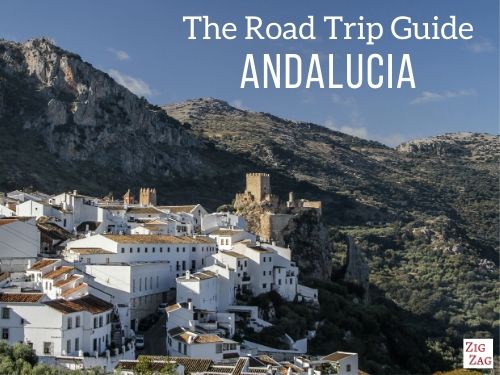
14. Zuheros Castle

Why visit? Our review
Zuheros is a small white village that is much less well-known because it is farther from the major tourist centers. It offers you a unique blend of history, natural beauty, and authentic Spanish charm. In our opinion, it’s the most beautiful in the region.
Nestled beneath limestone cliffs in the Sierra Subbetica Natural Park, it is surrounded by olive groves and overlooked by its 9th-century castle, which is built into a rocky outcrop. It’s truly impressive and not very well known; in fact, we’ve included it on our list of off-the-beaten-path spots in Andalucia.
We have learned that Zuheros Castle was remodeled in the 11th and then in the 15th century. Although access is limited to a single tower, you’ll enjoy a spectacular panoramic view of the village and its surroundings. Tickets are available at the nearby museum. Since the site isn’t very crowded, our visit was really enjoyable. We practically had the place all to ourselves!

Location
- in the white village of Zuheros (Province of Córdoba)
- From Córdoba = 1 hour and 10 minutes by car
- From Sevilla = 2-hour drive
- From Málaga = 1 hour and 30 minutes by car
- Directions: A 5-minute walk from the village center; tickets are available at the nearby museum
Useful tips
- Duration: 30 to 45 minutes
- Difficulty: Slightly uphill but no particular difficulties; the path to the tower is steeper; avoid visiting during the hottest part of the day
- There isn’t a specific tour for children, but Zuheros is one of the prettiest white villages in Andalucia in our opinion, so it’s still a lovely place to visit with the family
- Full adult price: 4€
- Hours: Closed on Mondays; open from April through September, Tuesday through Sunday, from 10 a.m. to 2 p.m. and from 5 p.m. to 7 p.m.; from October through March, Tuesday through Sunday from 10 a.m. to 2 p.m. and from 5 p.m. to 6 p.m. (check the official website here for any updates)
15. Viana Palace in Córdoba

Why visit? Our review
The Viana Palace in Córdoba is a place that, in our opinion, is worth visiting. Built in the 15th century, it is the result of the reconstruction of several medieval houses. Named after its last owner in the 20th century, we realized that it is truly one of the best-preserved stately homes in the city. A serene atmosphere reigns in its 12 patios, each with its own unique style.
Inside, we enjoyed the collections of art and artifacts that bear witness to the aristocratic history. A single ticket grants access to the courtyards and the palace, with the option of guided or self-guided tours.
See more photos.

Location
- In the city of Córdoba, a 20-minute walk from the Mosque-Cathedral
- From Sevilla = 2-hour drive
- From Málaga = 2-hour drive
Useful tips
- Duration: Allow about 1 hour on site
- There isn’t a specific trail for children, but it’s a very nice place to visit as a family; there’s also a gardening area with many different species of plants and flowers.
- Accessibility: easy access; the site is accessible to people with disabilities (and strollers) via ramps and an elevator
- Full adult price: €12
- Hours: Open from July through August, Tuesday through Sunday, 9:00 a.m. to 3:00 p.m.; from October through December, Tuesday through Saturday, 10:00 a.m. to 7:00 p.m.; during Feria week in May, open May 21–26, 10:00 a.m. to 2:00 p.m.; closed on Mondays (see the official website here for any updates)
- Save time and book your ticket!

It’s time to book!
Compare everything: airlines, prices, schedules, and availability.
Other Castles and Palaces in Andalucia
La Calahorra
We were surprised to find that the Château de La Calahorra does not date back to the Moorish period, unlike most of the other fortresses in Andalucia. Nestled at the foot of the Sierra Nevada, we learned that it is one of the first Italian Renaissance castles built outside of Italy, dating from the early 16th century. We were impressed by its circular bastions and the four towers located at the corners of the rectangular fortress. Although the fort is privately owned, with tours limited to Wednesdays at varying times, in our opinion, it’s definitely worth stopping by to admire its Renaissance architecture and the panoramic views from the hilltop.

Olvera Fort
The Fort of Olvera, about a 1.5-hour drive from Cádiz, was built during the Nasrid dynasty in the 12th century. Its elongated triangular shape is quite unique, as is the shape of the hill on which it is built.
The two towers and the main structures date back to the Moorish period. To get there, you’ll need to take a fairly narrow path and climb a spiral staircase.

San Sebastian Castle in Cádiz
We found the Fort of Saint Sebastian in Cádiz to be very charming. Perched on a small island connected by a boardwalk, this castle offers a fascinating journey through history. Once the site of Greek temples dedicated to Chronos, and later a watchtower during the Moorish period, you will notice that it is notable for a chapel built in the 15th century by Venetian sailors and dedicated to Saint Sebastian. The current fortress dates from the 18th century and still houses it, along with a lighthouse. Please note that entry to the interior is prohibited. We still enjoyed the walk, with beautiful views of Cádiz, especially at sunset

Guardia de Jaén
Stop by the Fort de la Guardia de Jaén, a 15-minute drive from the city of the same name. Did you know that this small fortress played a strategic role during the Moorish period and after it was captured by Ferdinand III? Originally built in the 8th century, this fort was converted into a palace after the fall of the Nasrid dynasty and underwent renovations right up until the 19th century! Despite the construction, you can still visit the square tower, the round tower, the cisterns, and the Gothic arches. Ready for this wonderful discovery?

Alcazar de Arriba
Before becoming a palace, the Alcázar de Arriba was first a fort under the Almohad dynasty, and in the 15th century it became an oval-shaped fortress that was more resilient than the other Alcázars. Unfortunately, it was damaged by earthquakes over the next two centuries and is now closed, but the Parador hotel section remains open to the public, offering stunning arches and views of the town of Carmona.

Lebrija Palace in Sevilla
Let’s head to Sevilla, the capital of Andalucia, to step inside the Lebrija Palace! This Renaissance-era Sevillian mansion was restored in the 20th century by the Countess of Lebrija. She incorporated artistic and historical treasures from various eras into it. Get ready to be amazed, because this place is full of wonders: Roman mosaics, vases, works of art, arches, doors… It’s a veritable treasure trove of archaeological finds! If you’re passionate about art and history, don’t hesitate to go check it out!
Learn more.

Jabalquinto Palace in Baeza
In the province of Jaén, the town of Baeza is home to the Palacio de Jabalquinto, one of the city’s most iconic architectural gems. We found it remarkable for its refined Gothic style. Built in the 15th century, its courtyards were redesigned during the Renaissance. Take a moment to admire its ornate facade, the harmonious contrast between the arches on the two floors, and the magnificent Baroque staircase. You’re sure to be amazed!

Medina Azahara
This is one of the places that surprised us the most, especially when you’re used to visiting Roman ruins. Medina Azahara (or Madinat Al-Zahra in Arabic, meaning “shining city”) is a complex of ruins from a vast palace-city built in the 10th century during the Umayyad dynasty. The fortified city was built on three levels. You can still see some of its rich architectural features.
Destroyed by the civil wars of the 21st century, this ancient fortified city is a UNESCO World Heritage Site.
See more photos.

Mondragon Palace
The Palacio de Mondragón is a prime example of Mudejar architecture, a style that flourished from the 13th to the 16th century and blends elements of Christian and Muslim art. It was modified and expanded by the various noble families who lived there, the most notable of which was the family of the Marquis of Villasierra. You’ll be able to appreciate the blend of styles between the Renaissance-style gate on the façade, the traditional Andalusian garden, and the other elements of the various patios.

Alcaudete Castle
Have you heard of Alcaudete Castle? This Hispano-Moorish fortress was built on a Roman site—impressive, isn’t it?
Unlike other forts, this one was conquered by the Christians as early as the 11th century and was the site of several conflicts with the Moors, until Christian forces retook the fortress in the 14th century.
You’ll see that it’s very well preserved; it has been restored to reflect the medieval era. Be sure to ) pick up the audio guide to learn more about this amazing place!

And also…
- Alcazaba of Almería
- Colomares Castle
- Castillo de Niebla
Frequently asked questions
What is the difference between Alcazar and Alcazaba?
From what we understand: An “Alcazar” was a fortified palace built for a king, of which there were many during the Moorish period, while an “Alcazaba” was a fortified or defensive city where troops were stationed.
What is the most famous palace in Andalucia?
In our opinion, the most famous palace in Andalucia is undoubtedly the Alhambra! Located in Granada, we explored this masterpiece of Moorish architecture, built in the 13th century by the Nasrids. Renowned for its refined details, lush gardens, and breathtaking views, it is Spain’s most visited landmark. Listed as a UNESCO World Heritage Site, the Alhambra, its Nasrid Palaces, and the Generalife embody Andalusia’s cultural heritage.

When is the best time to visit the castles and palaces of Andalucia?
The best time to visit the castles and palaces of Andalucia is generally from March to May and from September to November, when temperatures are milder. We’ve also noticed that spring and fall generally attract fewer tourists (except during holidays). This made our experience there more peaceful and authentic.
What are some interesting castles to visit on the Costa del Sol?
The Costa del Sol has several castles you can visit. Gibralfaro Castle in Málaga, renowned for its spectacular views of the city, is by far the most famous. You can also discover other, slightly smaller and lesser-known ones, such as:
- Sohail Castle in Fuengirola, dating from the 10th century, which regularly hosts cultural events
- Colomares Castle in Benalmádena is a tribute to Christopher Columbus
- or the Duchess’s Castle in Manilva, near Gibraltar, which overlooks the beach and houses an archaeological museum

What is the predominant architectural style in Andalucian palaces?
The dominant architectural style in the Andalucian palaces that left a lasting impression on us is the Mudéjar style, a blend of Moorish and Christian influences. This architectural style is primarily characterized by the use of horseshoe arches, geometric patterns, colorful azulejos, and carved wooden ceilings. You can also see Gothic, Renaissance, and Baroque elements, such as the Alcázar of Sevilla, which best exemplifies the fusion of these styles.

PLAN YOUR TRIP TO Andalusia
Inspiration

Practice
Places not to be missed


SHE MADE THE TRIP Claire