Are you passionate about Spanish dance and music? The Museo del Baile Flamenco awaits you in the heart of Sevilla! We were captivated by this museum, which is entirely dedicated to this iconic Andalucian art form, with its themed galleries and a show at the end of the day. Located right in the heart of the historic district, just a few minutes from the cathedral, it is an ideal stop for anyone wishing to understand the origins and richness of flamenco.
In this article, check out our photos and all our tips for making the most of your visit to the Museo del Baile Flamenco.
This opinion is completely independent, based on our experiences. We made our own choices, visited the area anonymously, and paid our bills in full.
Why visit the Museo del Baile Flamenco?
Is the museum worth it? Our opinion:
Yes, this museum is worth a visit. We found it particularly informative for understanding the roots and conventions of flamenco. Between the exhibition halls and the performance, you’ll leave with a comprehensive understanding of this art form. It’s one of the best things to do in Sevilla! >> Book your admission to the museum and the show now.

WHERE TO STAY IN Seville
Option 1: In the historic center
Convenient for visiting everything on foot, we recommend:

Option 2: El Arenal
Between quiet streets and riverside ambience, we recommend it:

See our complete selection of the best hotels and neighborhoods in Sevilla
Our favorite moments
This museum was really nice, and we saw lots of beautiful things there. Here are our three favorite moments:
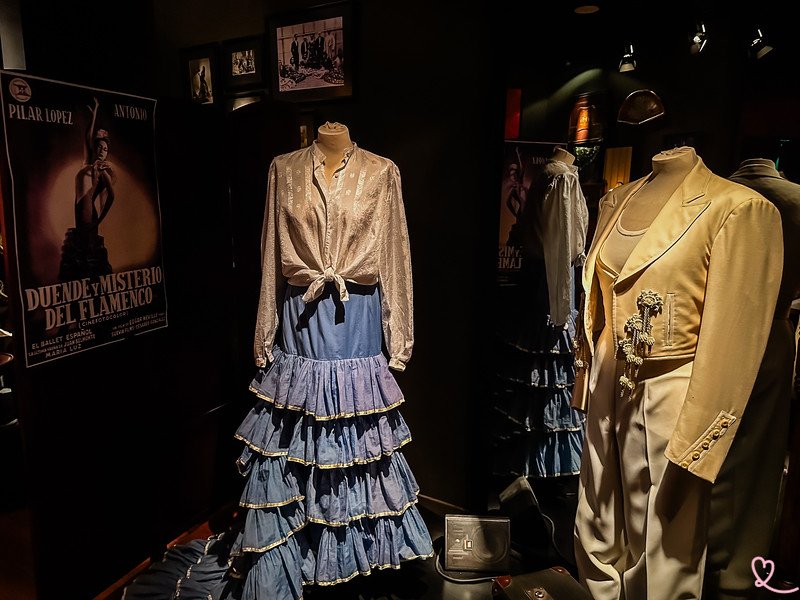
- Admire the costumes from different eras
- Discover works of art that celebrate flamenco
- Attending a flamenco show is a real taste of Spain!

Location: Museo del Baile Flamenco, Sevilla
Where is the museum?
- In downtown Sevilla, in the Casco Antiguo neighborhood
- A 5-minute walk from the cathedral
- Near theAlcázar

RENT A CAR IN Andalucia
- Compare prices on our preferred platform: DiscoverCars – one of the best rated sites.
- Choose a compact car, as some villages have very narrow streets!
- Think ofcomprehensive insurance for the same reason
- Book early for choice.

How to get there?
The museum is located right in the heart of the historic district, making it easy to walk there from the cathedral or the Alcázar. If you prefer public transportation, the Menéndez Pelayo (Puerta de la Carne) bus stop is served by lines 01, 21, A1, A8, and C3. You can also get off at the Plaza Nueva tram stop and walk to the museum.
Parking
As in the rest of Sevilla’s historic center, it can be difficult to get around and find parking near the museum. We recommend using a paid underground parking garage, where rates are still affordable, such as the Torre Sevilla Parking Garage.

PLAN YOUR DREAM TRIP TO andalucia
All the information you need for your trip:
- 7 maps that make planning easier
- + 150 pre-selected locations
- Practical advice
- 300+ photos to help you choose
Useful tips: duration, schedules, eating…
Best time to visit
We recommend visiting the museum in the late afternoon, before attending the evening show. Be sure to reserve your time slot in advance; performances are at 5:00 p.m., 7:00 p.m., and 8:45 p.m. They sell out quickly. Book your admission to the museum and the show now.
Length of visit and main difficulties
The show lasts about 1 hour and 30 minutes. We recommend allowing an extra hour to enjoy the museum and its gift shop, for a total of about 2 hours and 30 minutes. The site is accessible to people with reduced mobility. There is an elevator and some benches to sit on.

Visiting with children
The museum does not offer any activities specifically designed for young children. However, children who are curious about Spanish dance and culture will enjoy the visit—especially the show at the end of the day!
Schedules and rates
- The museum is open every day from 11 a.m. to 6 p.m.
- Performances at 7:00 p.m. and 8:45 p.m.
- €25 for the show only, €29 for the show and the museum

Catering
There is no restaurant inside the museum. But you’re right in the heart of Sevilla’s historic center, which is full of great restaurants. Check out our article on the best restaurants in Sevilla for some ideas.
A Journey Through the History of Flamenco
Flamenco originated in Andalucia in the 18th century among the Romani communities living in the region. It has its roots in several cultural traditions: Andalucian, Romani, Moorish, and Sephardic. We found it fascinating to learn how this art form subsequently took shape in the 19th century around the *cafés cantantes*—cafés where singers, dancers, and guitarists performed. Flamenco also went through a period of convergence with opera in the early 20th century, before being recognized by UNESCO as an Intangible Cultural Heritage of Humanity in 2010.

The museum traces this evolution through several themed galleries. There, you’ll discover the different styles of flamenco, a room dedicated to cafés cantantes, and a chronological exhibition exploring the major periods of this art form and its connection to opera. The staging of flamenco is illustrated through videos, explanatory photos, and documentaries. We also enjoyed the replica of an artist’s dressing room and the original section of the stage where hundreds of dancers have performed over the years. A cellar with a small stage rounds out the tour.

Flamenco and Art
Throughout the exhibition, a gallery highlights the connection between flamenco and the visual arts. There you’ll see paintings, sculptures, and guitars that have been transformed and decorated by artists. We found this section particularly original, as it shows just how much flamenco continues to inspire contemporary artistic creation.

A spectacular flamenco show
The performance takes place in the museum’s central courtyard, beneath beautiful stone arches that provide an authentic setting for the show. We were impressed by the dancers’ precise and intense movements, as well as by the beauty of the dancer’s costumes. The songs and live music accompany the dancers and give the show its full impact. We loved that moment—it was a real immersion in authentic Spain. It’s definitely worth it! In our opinion, this is a must-see, and by choosing this museum, you’re sure to enjoy a high-quality show. Book your admission to the museum and the show now.

PLAN YOUR TRIP TO Andalusia
Inspiration

Practice

Places not to be missed