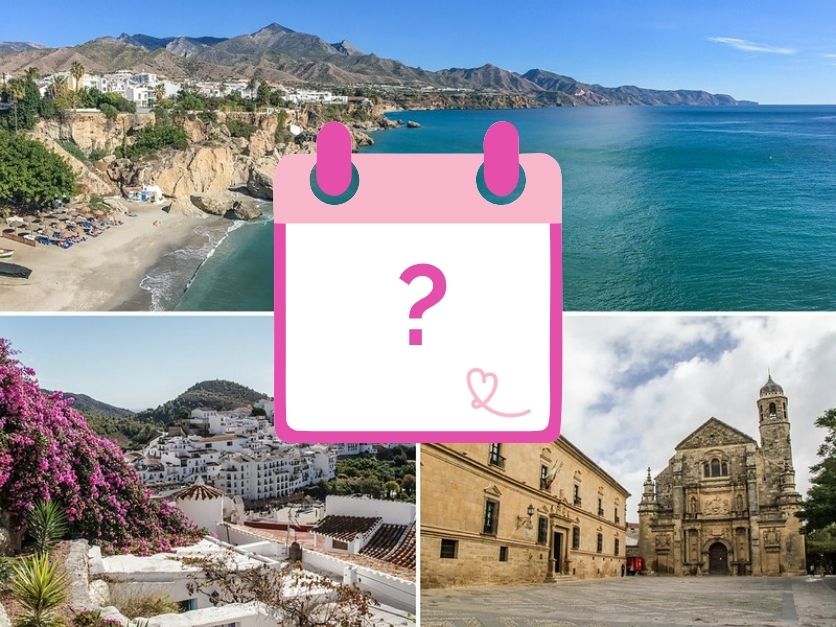
When is the best time to visit Andalucia?
Well, that depends on your criteria.
Here’s our complete guide with details to help you make your decision based on:
- Weather (temperature, rain, wind, etc.),
- Crowds and prices,
- Major cities and their landmarks,
- Skiing in the Sierra Nevada,
- Sea temperature, when to go swimming,
- Major events (Semana Santa, Feria de Abril…,
- …
This opinion is completely independent, based on our experiences. We made our own choices, visited the area anonymously, and paid our bills in full.
When to Visit Andalucia: Summary
Best Month to Visit Andalucia
Andalucia is a great place to visit year-round, but not all seasons are created equal. Our favorite months are April, May, September, and October, because temperatures remain pleasant both on the coast and inland, the light is soft, and you can visit the major heritage sites without the sweltering heat of summer. We also enjoy the orange blossoms and patios in the spring, which add a special charm to the historic towns and the gardens of the Alcázars. Check out our selection of the best attractions in Andalucia.

WHERE TO STAY IN Andalucia
Our independent picks for the accommodation of your dreams:
Select by city:
- Best hotels in Sevilla
- Best hotels in Malaga
- Best hotels in Granada
- Best hotels in Cordoba
- Best hotels in Ronda
- Best hotels in Almeria
- Best Hotels in Cádiz
Select by hotel type:

Best Time to Visit Andalucia
It all depends on what you’re looking for:
- Best time to visit the major cities ( Sevilla, Córdoba, Granada…): March through June and September through November, avoiding the heat waves in July and August
- Best time to go to the beach: June through September
- Best time for hiking: March through June and September through November
- Best time to ski in Sierra Nevada: December through April
- Best time for patio and garden blooms: April and May
- Best time to escape the winter in Northern Europe: December through February on the coast

RENT A CAR IN Andalucia
- Compare prices on our preferred platform: DiscoverCars – one of the best rated sites.
- Choose a compact car, as some villages have very narrow streets!
- Think ofcomprehensive insurance for the same reason
- Book early for choice.

When to Visit Andalucia: Factors to Consider
If you don’t want to read the whole article, here’s a summary based on what you’re looking for:
- Weather, temperatures, wind: Summers are hot—even scorching—inland: Sevilla and Córdoba regularly exceed 38°C in July and August. The coast remains milder thanks to the sea breeze. Winters are mild along the coast, with daytime temperatures around 16 to 18°C, but significantly cooler in Granada and downright harsh in the Sierra Nevada.
- Swimming: The best time to swim is from June through September, when the water temperature rarely exceeds 24°C. The Sierra de Aracena and the inland region have no access to the sea, but a few natural pools and rivers offer a refreshing alternative in the summer.
- Crowds: The months of March through June and September through November offer a good balance between moderate crowds and pleasant conditions. July and August remain busy along the coast, while Holy Week and the April Fair in Sevilla cause a specific spike in visitor numbers in the spring.
- Prices: Accommodation rates rise in the summer along the coast and during the major spring holidays. Prices drop significantly in winter, except during the Christmas season, making it the most affordable time of year to explore these cities.
When to Visit Andalucia: Weather and Conditions
Climate
Andalucia has a Mediterranean climate, characterized by long, dry summers and mild winters. It rains very little, especially from June through September, and the sun shines most of the year. However, we have found that the region is by no means uniform: the summer heat inland is quite different from the mild climate along the coast, and winter in the Sierra Nevada stands in stark contrast to winter on the Costa del Sol. It is precisely this diversity of climates that makes Andalucia an interesting place to explore throughout the seasons.

North, south, coast, or inland?
Unlike smaller islands, Andalucia has distinct climatic contrasts depending on the region. On the coast, in Málaga or Cádiz, temperatures remain moderate year-round: around 30°C in the summer and 17°C in the winter. Inland, in Sevilla or Córdoba, summers are significantly hotter, with temperatures peaking at 40°C or even higher on some days in July and August. We also recommend visiting these two cities early in the morning during the summer to avoid the hottest part of the day.
At high altitudes, the Sierra Nevada has a unique mountain climate: snow from December through April, possible frost at night, and temperatures that drop significantly starting in the fall. The villages of the Alpujarras, which are at a slightly lower elevation, have a more temperate climate, though it is still cooler than on the coast. This contrast offers an experience that’s quite rare in Europe: skiing in the Sierra Nevada in the morning and enjoying a beach on the Costa Tropical in the afternoon—all within a less than an hour-and-a-half drive.

PLAN YOUR DREAM TRIP TO andalucia
All the information you need for your trip:
- 7 maps that make planning easier
- + 150 pre-selected locations
- Practical advice
- 300+ photos to help you choose
Levante Wind and Calima
There are two weather phenomena you should be aware of before you leave. The Levante wind blows from the Strait of Gibraltar, especially in the spring and summer: it pleasantly cools the coast, but can also stir up sand on the most exposed beaches, particularly in Tarifa. The calima, on the other hand, is a hot, dust-laden wind from the Sahara. It occurs sporadically, reduces visibility, and causes temperatures to rise by several degrees in just a few hours. These phenomena are still rare, but we were able to observe one during a trip in June, which gives the sky a rather distinctive orange hue.
Length of day and sunshine
The length of the day varies greatly throughout the year. Expect about 9:30 a.m. on December 21, compared to more than 2:30 p.m. on June 21. Andalucia has one of the highest levels of sunshine in Europe, with more than 300 sunny days a year in several provinces. Even in winter, sunny days are still common along the coast, allowing visitors to enjoy outdoor terraces at times when other parts of Europe are gray and gloomy.

Rain in Andalucia
Rainfall is concentrated mainly between November and March, with a marked peak in the fall in the provinces of Sevilla, Huelva, and Cádiz, which are exposed to Atlantic weather systems. The Mediterranean coast, sheltered by the mountains, receives significantly less rainfall. Summer, from June to September, is almost entirely dry throughout the region, which also explains the arid landscape found in certain areas, such as the Tabernas Desert.
Wind in Tarifa and along the Costa de la Luz
The Tarifa region, at the southern tip of Andalucia, is known for being one of the windiest areas in Europe. This steady wind, which blows in from the Strait of Gibraltar, makes it a prime destination for kitesurfing and windsurfing, with a season that runs mainly from April to October. Elsewhere along the coast, the wind remains more moderate and is felt most strongly in the late afternoon, providing a pleasant cool breeze on summer evenings.

Crowds and prizes
The busiest times of year are July and August along the coast, as well as Semana Santa and the Feria de Abril in Sevilla, when accommodations are often booked several months in advance. The spring and fall months offer a good balance between crowds and pleasant weather. Winter—excluding the Christmas holidays—remains the quietest and most affordable time of year to visit major cities.
FUN in Andalucia: activities
- Cooking course in Sevilla
- Canyoning from the Costa del Sol
- Guided Hike on the Caminito del Rey

Sea Temperature in Andalucia: When to Go Swimming
You can swim from April through October, depending on how well you tolerate cool water. Sea temperatures vary significantly depending on the coastline:
- January, February, March: between 15 and 17°C
- April and May: between 17 and 19°C
- June: about 21°C
- July and August: between 23 and 24°C
- September and October: between 21 and 23°C
- November and December: between 17 and 19°C
The Costa del Sol and the Costa Tropical generally have slightly warmer water than the Costa de la Luz, which is more exposed to the Atlantic. Discover our selection of the most beautiful beaches in Andalucia.

When to Visit the Major Cities of Andalucia
We strongly recommend that you visit several cities during your trip to Andalucia. They are all unique: the bustling streets of Sevilla, the elegance of Córdoba, the historic alleys of Granada, the relaxing atmosphere of Cádiz… But they all have one thing in common: the summer heat can make visiting difficult in the middle of the day, especially inland.
We therefore recommend visiting between March and June or September and November to explore Sevilla, Córdoba, and Granada under ideal conditions. If you do end up traveling in the summer, plan your sightseeing for early in the morning or late in the day, and save the hottest part of the day for museums and shaded areas. On the other hand, winter remains pleasant in these cities, with mild days around 15 to 18°C, perfect for exploring without the spring crowds. Here is our selection of the most beautiful cities in Andalucia:
- Córdoba, a city where history comes to life—not too big, with a charming downtown
- Sevilla, a lively city with a variety of neighborhoods brimming with beautiful architecture and musicians
- Cádiz, a city with a relaxing charm, constantly connected to the sea
- Ronda: A Blend of Nature and History
- Granada, with its historic old neighborhoods, offers a different kind of charm
- Malaga, a modern and dynamic city, the gateway to the Costa del Sol

When to Go Skiing in the Sierra Nevada
The Sierra Nevada is home to Europe’s southernmost ski resort, with a ski area that reaches an elevation of over 3,300 meters. The season generally runs from December to April, sometimes lasting until early May, depending on snow conditions. January and February offer the best snow conditions, while March brings longer days that are often sunny. Find all skiing and hiking activities in the Sierra Nevada here.
What makes the experience quite unique is the contrast with the nearby coast: less than an hour and a half’s drive away, the Costa Tropical enjoys mild temperatures, around 18°C even in the middle of winter. We find this contrast between the mountains and the sea rare enough to be worth noting, and it’s worth a visit for travelers who want to experience both settings in a single day.

When to Observe Wildlife in Andalucia
Migratory Birds in Doñana
Doñana National Park, one of Europe’s most important wetlands, is home to hundreds of thousands of birds each year. The best times for birdwatching are in the spring, from March to May, when breeding species arrive, and in the fall, from October to November, during migration and the arrival of wintering birds such as cranes and geese. We recommend booking a guided tour, as access to certain areas of the park is restricted.
Subscribe to our Newsletter
- Get away from it all with Region Lovers’ beautiful destinations!
- Once a month
- Advertising-free
Whales and Dolphins
The Strait of Gibraltar, a passageway between the Atlantic and the Mediterranean, attracts many species of cetaceans. You can also see them from Málaga. Common dolphins and bottlenose dolphins can be seen year-round from Tarifa. For whales, the best time to see orcas is from July through September, while fin whales are most commonly seen between March and June. These excursions are usually taken by boat from Tarifa. Find all the whale-watching tours here.

Best time for other activities in Andalucia
When to Go Hiking
The best seasons for hiking are spring and fall, when temperatures remain moderate on most trails. In the summer, it’s best to go hiking early in the morning, especially in low-lying areas like the Caminito del Rey or the badlands around Tabernas. The Sierra Nevada and the Sierra de Cazorla offer pleasant conditions through October, before the cold sets in at higher elevations.

When to Enjoy Water Sports in Tarifa
The kitesurfing and windsurfing season in Tarifa runs from April to October, with particularly strong winds in the summer. Spring and fall are ideal for intermediate surfers, while summer attracts those who love strong winds. Winter is still feasible for the most experienced riders, but the water and air temperatures make for a less comfortable session.
When to See the Flowers Bloom
April and May are the months when the flowers bloom in Andalucia. The patios of Córdoba are adorned with geraniums, the orange trees of Sevilla fill the streets of the historic center with their fragrance, and the gardens of the Alcázar and the Generalife in Granada are at their peak. We find this time of year particularly pleasant for photographing the flower-filled alleyways, as long as you’re willing to deal with the increased crowds associated with the Córdoba Patios Festival.

Bullfights and local festivals
The bullfighting season runs from April to October, with a schedule marked by each town’s ferias. Whether you want to attend or simply soak up the atmosphere surrounding these events, keep in mind that they draw large crowds and temporarily affect traffic and lodging rates in the cities where they take place. The best-known ferias are the one in Sevilla in April and the one in Jerez de la Frontera in May, which focuses more on horses and sherry cellars.
When to Visit the Alhambra in Granada
The Alhambra in Granada is open to visitors year-round, but the number of time slots for the Nasrid Palaces is limited each day, so advance reservations are required regardless of the season. The months of March through June and September through November offer the best balance between pleasant weather and reasonable crowds. In the winter—especially in November and January—we were able to visit the gardens and palaces in a very pleasant, peaceful atmosphere. A visit in the summer is still possible, but the lines and the heat can make it more tiring to visit in the middle of the day. Book your tickets now!


It’s time to book!
Compare everything: airlines, prices, schedules, and availability.
Description of the Seasons in Andalucia
Spring in Andalucia
Spring is undoubtedly our favorite season for exploring Andalucian cities. Temperatures remain mild, the gardens are in bloom, and the days are gradually getting longer. This is also the season for major religious and popular events: Holy Week (Semana Santa), which falls between March and April depending on the year, transforms the streets of Sevilla and Granada with its processions, and the April Fair (Feria de Abril) then brings the city together in a festive atmosphere filled with music and traditional costumes. We recommend booking your accommodations several months in advance if you’d like to attend these two highlights.
Summer in Andalucia
The Andalusian summer is characterized by intense heat inland, where temperatures frequently exceed 38°C in Sevilla and Córdoba. The coast remains more bearable, around 30°C, thanks to the sea breeze. It’s peak season for beaches, bullfighting festivals, and water sports in Tarifa. We recommend adjusting the pace of your city tours: spend the mornings visiting landmarks, set aside the afternoons for a nap or a trip to the beach, and go out in the evening when the heat subsides.

Fall in Andalucia
Fall brings a gradual return of cooler weather and the first rains, especially starting in November. September and October remain warm and often dry, making them an excellent time to extend the swimming season while enjoying fewer crowds. The Sierra de Aracena takes on golden hues at the end of the season, and this also marks the beginning of the montanera, the period during which Iberian pigs are raised in the wild under the oak trees.
Winter in Andalucia
Winters in Andalusia remain mild along the coast, with daytime temperatures around 16 to 18°C, which often make it possible to have lunch on a terrace. Inland, mornings are cooler, especially in Granada, where temperatures can drop below 5°C before sunrise. It’s also ski season in the Sierra Nevada, offering a contrast you won’t find anywhere else in Spain: snow in the mountains and mild weather along the coast at the same time.

Events to See or Avoid in Andalucia
Depending on your interests, you should also consider events that could significantly impact your trip and adjust your departure dates accordingly—whether you absolutely want to attend a festival or don’t want to be caught up in an event:
- Semana Santa (March or April): Holy Week is one of the most significant events in Andalucia. Processions wind through the streets of Sevilla, Granada, and Málaga day and night, with brotherhoods dressed in traditional costumes. It’s a spectacular sight, but it’s also one of the busiest and most expensive times of the year.
- Feria de Abril (April): Two weeks after Holy Week, Sevilla hosts its annual festival: music, dance, and traditional costumes bring a vast festival grounds on the outskirts of the city to life.
- Romería del Rocío (May or June, during Pentecost): This popular pilgrimage brings together hundreds of thousands of people around the village of El Rocío, in the province of Huelva. It blocks certain roads in the region for several days.
- Jerez Horse Fair (May): This horse fair in Jerez de la Frontera combines equestrian demonstrations, sherry tastings, and a festive atmosphere.
- Jerez Flamenco Festival (February): This world-renowned festival brings together the greatest artists in cante, baile, and toque in the city’s historic bodegas.
- Sevilla International Film Festival (November): This film festival takes place in several theaters in Sevilla’s historic center, outside of the peak tourist season.

Best month to visit Andalucia
And if you’re wondering what the best month is to visit Andalucia, check out our articles on the topic:
- Andalucia in January
- Andalucia in February
- Andalucia in March
- Andalucia in April
- Andalucia in May
- Andalucia in June
- Andalucia in July
- Andalucia in August
- Andalucia in September
- Andalucia in October
- Andalucia in November
- Andalucia in December
PLAN YOUR TRIP TO Andalusia
Inspiration

Practice
Places not to be missed


SHE MADE THE TRIP Claire