Want to visit Andalucia in August?
Find out if the region is right for you at this time of year, with our comprehensive guide to climate, travel conditions, crowds, prices, attractions and events.

This opinion is completely independent, based on our experiences. We made our own choices, visited the area anonymously, and paid our bills in full.
Traveling to Andalucia in August: Quick Answers
Is the weather nice in Andalucia in August? Is this a good time to visit?
August is the quintessential beach month in Andalucia. The sea reaches its warmest temperatures of the year, the sun shines nonstop, and summer nights stretch on at the outdoor cafes well past midnight. It is also, quite simply, the busiest month of the year: the beaches of the Costa del Sol and the Costa de la Luz are packed, accommodations are booked months in advance, and rates reach their annual peak. For history buffs, the heat in inland cities in August is intense. Afternoons in Sevilla and Córdoba regularly reach temperatures of 38°C to 40°C. We recommend scheduling cultural visits for early in the morning or in the evening, and spending your afternoons at the beach, the pool, or in shaded areas. With a little planning, August is still a great month to explore Andalucia, as long as you’re willing to go with the flow of the summer season.

WHERE TO STAY IN Andalucia
Our independent picks for the accommodation of your dreams:
Select by city:
- Best hotels in Sevilla
- Best hotels in Malaga
- Best hotels in Granada
- Best hotels in Cordoba
- Best hotels in Ronda
- Best hotels in Almeria
- Best Hotels in Cádiz
Select by hotel type:

Traveling in Andalucia in August: Overview of Conditions
Temperatures
August is as hot as July, though it may be slightly cooler toward the end of the month along the coast. Inland, Sevilla and Córdoba maintain daily averages of 36°C to 38°C (97°F to 100°F), with regular highs above 40°C during heat waves. Granada remains slightly cooler at higher elevations: expect 33°C to 35°C during the day, with cooler nights around 18°C to 19°C. On the coast, as in Málaga, the sea breeze keeps temperatures around 29°C to 31°C (84°F to 88°F), making them more comfortable for outdoor activities.
Water temperatures
The Mediterranean Sea reaches its annual peak in August, with temperatures ranging from 25°C to 27°C (77°F to 81°F) along the Costa del Sol. This is the best time of year for swimming, snorkeling, and water sports. On the Atlantic side, around Cádiz and the Costa de la Luz, temperatures remain around 22°C to 24°C, slightly lower than on the Mediterranean coast.
Crowds and prizes
August is the busiest month. The beaches of the Costa del Sol are crowded in the afternoon, the historic centers of Sevilla, Córdoba, and Granada attract huge numbers of visitors, and sites likethe Alhambra and Seville Cathedral are fully booked several weeks in advance. Accommodation rates are at their highest level of the year. Book your entire stay as soon as possible.
RENT A CAR IN Andalucia
- Compare prices on our preferred platform: DiscoverCars – one of the best rated sites.
- Choose a compact car, as some villages have very narrow streets!
- Think ofcomprehensive insurance for the same reason
- Book early for choice.

Opening conditions
All attractions, museums, and monuments are open in August, often with extended hours until 9 or 10 p.m. Evening tours of the Alhambra and the Mezquita-Catedral in Córdoba are particularly popular and should be booked well in advance. The beach bars and clubs are in full swing all month long. The midday break between 2:00 p.m. and 4:00 p.m., which is sometimes extended until 5:00 p.m., is still observed in many shops and museums. Restaurants don’t serve dinner until 9:30 p.m., and the outdoor seating areas stay lively until 1 a.m. or later.
Length of day
Daylight hours average 13 hours and 45 minutes at the beginning of the month, then gradually decrease to about 13 hours by the end of August. The days are still very long, giving you plenty of time to alternate between morning visits, a midday break, and evening outings.

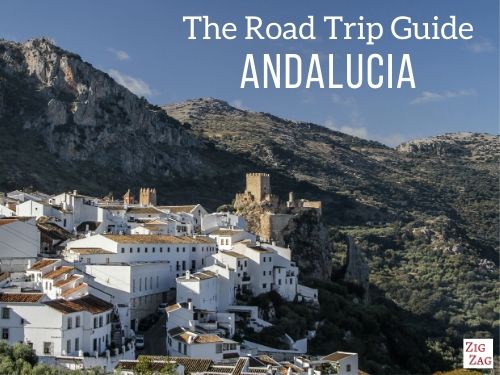
Top Attractions in Andalucia in August
In August, the pace of visits is dictated by the heat. We’ve learned to structure our days in two parts: exploring historical sites and cultural attractions as soon as they open, and spending the afternoon at the beach and relaxing. Among the must-haves:
- The Alhambra in Granada, a 14th-century Nasrid masterpiece—be sure to book a morning or evening tour
- The Mezquita-Cathedral of Córdoba, whose interior remains cool even in the height of summer
- The beaches of the Costa del Sol and the Costa de la Luz, at their best for swimming
- Sevilla’s Cathedral and Alcázar, right when they open to beat the heat
- The villages of the Alpujarras and the village of Frigiliana, which are significantly cooler than the towns in the lowlands
- Granada’ s Albaicín district at sunset, from the watchtowers
- Boat tours to spot dolphins and whales off the coast of Gibraltar
- The Tabernas Desert, a landscape unique in continental Europe, is best visited early in the morning
- Málaga’s museums, including the Picasso Museum, air-conditioned and accessible in the afternoon
- …. See the Andalucia’s top attractions.
And lots of activities like these:
FUN in Andalucia: activities
- Cooking course in Sevilla
- Canyoning from the Costa del Sol
- Guided Hike on the Caminito del Rey

Weather in Andalucia in August – what to expect
The Andalusian climate in August is that of the height of summer: guaranteed sunshine, cloudless blue skies, and heat that lingers from morning to night inland. The coast enjoys a sea breeze that makes the afternoons noticeably cooler. This is the month when it’s most helpful to be aware of the differences between different regions before planning your trip. We have often recommended that our readers combine a few days in Granada or the Alpujarras with a stay on the coast to enjoy both atmospheres without having to endure the heat all the time.
On the coast
The Costa del Sol and the Costa de la Luz offer the best beach conditions in August. Temperatures reach 29°C to 31°C during the day along the waterfront, tempered by a steady breeze. The beaches get very crowded around midday, especially between Málaga and Marbella: to find some space, go early in the morning or head to beaches that are harder to reach by car. We especially enjoyed the evenings by the coast, when the heat subsides after 8 p.m. and walks along the seashore become pleasant again. On the Costa de la Luz, the wind conditions in Tarifa remain strong in August and attract a large community of kitesurfers.

Inland
Inland cities such as Sevilla and Córdoba experience temperatures in August that are comparable to those in July, and can sometimes be even hotter during heat waves. Afternoons between 1:00 p.m. and 7:00 p.m. can be exhausting, and it is not recommended to walk through historic districts during those hours. Our plan was to visit the sights starting at 9 a.m., enjoy lunch on a shaded patio, stay indoors between 1:30 p.m. and 6 p.m., and then head out again for the evening—which, in August, is particularly lively. The streets of Sevilla and Córdoba really come alive after 8 p.m., and the outdoor seating areas stay packed until 1 a.m.

In the mountains
In August, the Alpujarras and the mountain villages of the Sierra Nevada serve as a natural refuge even for the people of Andalucia themselves. Villages located at altitudes between 900 and 1,500 meters have daytime temperatures ranging from 23°C to 27°C, which is 10°C to 12°C cooler than in Granada. Hiking on the trails of the Alpujarras is possible, provided you set out before 8:30 a.m. to avoid the midday heat. In addition, the Tabernas Desert, located in the province of Almería, offers a landscape that is unique in Europe: its semi-arid landscapes, shaped by erosion, have served as the backdrop for numerous spaghetti westerns. It is one of the few deserts on the European continent, and it’s best to visit early in the morning to enjoy the low-angle light and the ochre hues without having to endure the heat.

Temperatures in August in Andalucia
Temperatures in August are very similar to those in July in inland cities. Along the coast, the tide will begin to go out slightly toward the end of the month. Here are the averages for the main destinations.
Weather in Sevilla
- Average daytime temperatures: 36°C (97°F)
- Average night-time temperature: 20°C (68°F)

Temperature in Málaga
- Average daytime temperatures: 30°C (86°F)
- Average nighttime temperature: 22°C (72°F)

Temperature in Granada
- Average daytime temperatures: 34°C (93°F)
- Average night-time temperature: 18°C (64°F)

Rain and Wind
August, along with July, is the driest month of the year in Andalucia. Rain is virtually nonexistent throughout the region, particularly in inland cities and along the Mediterranean coast. Isolated thunderstorms may occur in the mountains or in the province of Almería starting in the second half of the month, without affecting sightseeing itineraries in major cities.
- Rainfall in Sevilla: 1 to 5 mm
(in less than 1 day on average) - Rainfall in Málaga: 3 to 8 mm
(over 1 day on average) - Rainfall in Granada: 5 to 12 mm
(over 1 day on average)
There is absolutely no snow in August, not even on the highest peaks of the Sierra Nevada. The ridges are completely open and accessible to experienced hikers.
The Levante, a warm, dry easterly wind, remains a common occurrence in August along the Costa del Sol and the Strait of Gibraltar. These episodes can last several days and significantly raise the perceived temperature. On the Costa de la Luz, the poniente and levante winds continue to alternate, maintaining the wind conditions that have made Tarifa famous for water sports. Toward the end of the month, the winds begin to die down slightly, signaling the transition into September.

Sunshine
In August, daylight hours range from 1:45 p.m. to 1:00 p.m.
Sunrise is around 7:15 a.m. and sunset is around 9:00 p.m. at the end of the month.
Sunshine levels remained exceptional in August: we recorded an average of 10 to 11 hours of sunshine per day. The sky is deep blue and clear most of the time. Just like in July, the midday sun is very intense—UV levels are at their peak, so serious sun protection is essential starting in the morning. On the other hand, the late-afternoon light, between 7 and 9 p.m., is particularly ideal for photography and strolls: the ochre facades of Sevilla, the ramparts of the Alhambra, and the white-washed streets of Frigiliana take on the warm, contrasting hues so characteristic of an Andalusian summer.
The days gradually get shorter throughout the month, but they remain very long. Sunset shifts from 9:30 p.m. at the beginning of August to 9:00 p.m. by the end of the month, allowing you to continue enjoying the evenings outdoors to the fullest. This late afternoon light is one of the best things about August for photography enthusiasts and those who enjoy strolling through the old neighborhoods at night.

Water temperature – swimming in Andalucia in August
August is the best month of the year for swimming in Andalucia. The Mediterranean Sea is at its warmest, and conditions are ideal for swimming, diving, and water sports. On the Atlantic side, the slightly cooler temperatures of the Costa de la Luz are perfect for surfing and bodyboarding. The beaches get very crowded around midday: to enjoy a little more space, try going in the morning or head to beaches that are harder to reach by car, such as the coves in the province of Almería.
- Water temperature in Málaga: 25°C (77°F) on average
- Water temperature in Marbella: 25°C (77°F) on average
- Water temperature in Cádiz: 23°C (73°F) on average

Crowds and other conditions
August is the busiest month of the year. Major tourist cities, heritage sites, and coastal beaches are seeing their annual peak in visitor numbers, consisting mainly of Spanish vacationers and European tourists on summer break. We encountered long lines outside the Alhambra, even though we had made a reservation for a specific entry time: plan to arrive 15 minutes before the time indicated on your ticket. Popular restaurants in historic districts are often fully booked in the evening without a reservation.
However, August doesn’t mean a subpar experience. The nightlife reaches its peak: flamenco shows, outdoor concerts, night markets, and lively outdoor cafes are all an integral part of the Andalucian summer atmosphere. Nighttime temperatures remain high in inland cities—expect temperatures as high as 24°C at midnight in Sevilla on some nights—and an air-conditioned room is essential for a comfortable night’s sleep. On the coast, the nights are cooler and more pleasant. A few useful local customs: dinner is served no earlier than 9:30 p.m., and some shops are still closed between 2:00 p.m. and 5:00 p.m.

Nature and Landscapes in August
In August, the Andalucian countryside is at its driest point of the year. The grain fields were harvested several weeks ago; dry grasses dominate the plains, and the ochre-colored land stretches as far as the eye can see under the sun. This landscape, scorched by the summer sun, possesses a unique beauty—mineral-like and luminous—especially in the province of Almería, where the Tabernas Desert offers almost lunar vistas. In contrast, the coastlines remain highly appealing: the crystal-clear waters of Almería’s coves, the white-sand beaches of the Costa de la Luz, and the rocky coves of the Costa Tropical offer natural settings of exceptional beauty.
Marine wildlife is at its most active in August. Dolphin and whale watching trips from the Costa del Sol or Tarifa are taking place under excellent conditions: the sea is calm, the seabed is clearly visible, and bottlenose dolphins are abundant off the coast of the Strait of Gibraltar. Orcas, which passed through in July following bluefin tuna, are seen less frequently in August, but overall viewing conditions remain among the best of the year. In addition, natural parks such as Sierra de Cazorla, Segura y las Villas—the largest in Spain—offer hiking opportunities in August through pine and oak forests, where temperatures are much milder than in the lowlands.

Events in August in Andalucia
- Starlite Marbella Festival (continued): This international pop and variety music festival, which began in July, continues through August in the open-air venue on the outskirts of Marbella. The outdoor concerts bring together world-renowned artists in a festive, intimate setting. It is one of the most popular summer events on the Costa del Sol.
- Wine Night in Competa: In this mountain village in the province of Málaga, Wine Night is held every year on the night of August 14–15. Thousands of people gather around the fountain in the main square to taste the local Muscat wine, dance, and listen to traditional music until dawn. It is one of the most unique and festive village festivals in Andalucia.
- Feast of the Assumption (August 15): The Feast of the Assumption is celebrated in many villages in Andalucia with processions, concerts, and fireworks. It’s also one of the busiest weekends of the summer on Andalucian roads: expect longer travel times if you’re driving around August 15.
- Almería Flamenco Festival: Every August, this summer festival brings together flamenco artists from several generations in the city of Almería. The performances take place in historic venues in the city center and in flamenco clubs, offering an experience that is both authentic and high-quality.
- Feria de Málaga: This major popular festival, which is usually held in the second half of August, is one of the most important in Andalucia after the Feria de Sevilla. The casetas are set up in the Malagueta neighborhood, parades fill the city center, and outdoor concerts go on late into the night. The atmosphere is festive, very down-to-earth, and welcoming to everyone.


It’s time to book!
Compare everything: airlines, prices, schedules, and availability.
August prices
As everywhere, prices vary depending on what you are looking for. Accommodation ranges from youth hostels to 5-star hotels. It is therefore difficult to give a budget. In August, rates reach their highest level of the year, on par with July, particularly for accommodations by the sea and in the historic centers of major cities. Vacation rentals, especially along the coast, are often booked six months in advance. Away from the coast, inland cities like Córdoba remain slightly more affordable than seaside resorts, even though prices generally rise during the summer. Booking early is the only way to get good value for your money.
Other months
When to go to Andalucia, other months…
- Andalucia in January
- Andalucia in February
- Andalucia in March
- Andalucia in April
- Andalucia in May
- Andalucia in June
- Andalucia in July
- Andalucia in September
- Andalucia in October
- Andalucia in November
- Andalucia in December
Or read our article on the best time to visit Andalucia.
PLAN YOUR TRIP TO Andalusia
Inspiration

Practice
Places not to be missed